
Greystone, Birmingham•Serving patients since 1997

A damaged tooth does not always need to be replaced. Sometimes enough healthy tooth remains that the stronger decision is to rebuild and protect what is already there.
A dental crown surrounds the visible portion of a tooth, allowing Dr. Reeves to restore a tooth that needs more support than a smaller restoration can reasonably provide. Reeves provides ceramic crown treatment in Birmingham and also uses a digital same-day workflow for selected restorative cases.
The important decision happens before the crown is made. Dr. Reeves first needs to understand why the tooth is compromised and whether a crown is actually the right amount of dentistry.
Diagnosis determines whether the tooth needs broad coverage, a smaller restoration, or another approach.
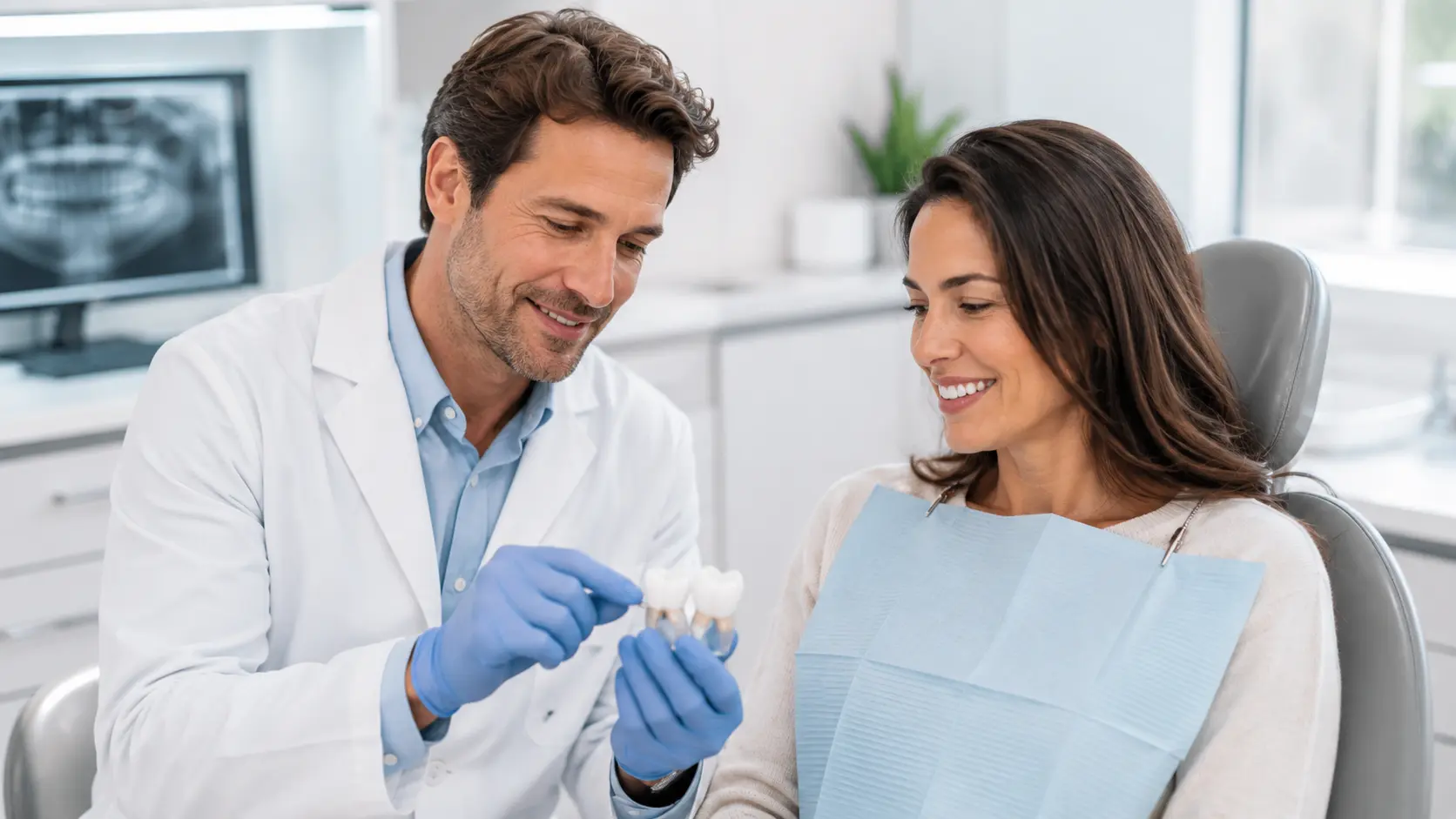
When part of a tooth breaks, wears down or becomes heavily restored, the visible damage naturally gets most of the attention. Dr. Reeves also has to consider the healthy structure that remains and whether that structure can predictably support the tooth moving forward.
That distinction matters because a crown is not simply a more expensive filling. It surrounds substantially more of the visible tooth and should be recommended because the tooth needs that level of protection—not because a crown happens to be available.
A dental crown is a custom restoration designed to cover the visible portion of a prepared tooth. It can restore lost form, protect remaining tooth structure and recreate a surface that can function against the neighboring and opposing teeth.
The restoration becomes the new exterior of that portion of the tooth, but the natural tooth underneath remains important. The quality and amount of remaining tooth structure, the bite and the reason the tooth needed treatment all affect the restorative plan.
A crown can surround a weakened tooth when broader coverage is appropriate. The design has to respect what natural structure remains underneath.
The crown rebuilds the external form of the tooth. That includes contours, contact with neighboring teeth and the surface that meets the opposing bite.
A visible crown also becomes part of the smile. Shade, length, proportion and surface form can matter as much as the restoration’s basic fit.
It becomes part of the way that tooth chews, contacts neighboring teeth and fits into the rest of the mouth. In a visible area, its color, proportion and contour also become part of the smile.
Dr. Reeves may consider a crown when damage or previous dental treatment has significantly changed the amount of natural tooth structure available. The reason can look different from one patient to the next, which is why the tooth has to be evaluated rather than assigned a procedure from a photograph.
A fracture may remove enough tooth structure that simply rebuilding the missing corner would not adequately address the problem. The location of the fracture and the amount of healthy tooth remaining influence how much protection is appropriate.
A tooth that already contains a substantial restoration has less untouched structure remaining than an intact tooth. If that tooth develops additional damage or the existing restoration begins to fail, broader coverage may become part of the restorative discussion.
Decay, wear, fractures and previous treatment can all leave a tooth structurally different from where it began. A crown may provide a way to rebuild the external form while protecting what remains underneath.
Crowns are restorations, and restorations can eventually need attention. Dr. Reeves may evaluate an older crown because of fracture, fit, changes around the underlying tooth, bite concerns or another clinical reason.
Sometimes the issue is simply larger than what a smaller direct restoration can reasonably address. A crown becomes useful when surrounding more of the tooth provides a more appropriate restorative design.
Seeing a crack or large filling does not tell the entire story. Two teeth that look similar from the outside can have very different amounts of remaining structure, different bite forces and different restorative histories.
That is why Reeves does not need to turn every damaged tooth into a crown case. If a smaller restoration can appropriately solve the problem, more extensive coverage may be unnecessary.
The opposite is also true. Asking a small restoration to support a tooth that really needs broader protection may not address the actual structural problem.
The amount of dentistry should match the amount of structural need.
A crown needs to survive in an environment where it is repeatedly exposed to chewing forces. It also needs contours that allow neighboring teeth, gums and the opposing bite to interact with it appropriately.
Appearance becomes especially important when the crowned tooth is visible in the smile. Reeves provides all-porcelain restorative treatment and uses CAD/CAM techniques for selected crown treatment.
Color is only one piece of making a ceramic crown look natural. Tooth length, surface contour, edge position, translucency and the relationship between the crown and the teeth beside it can be just as noticeable.
It should not look like a piece of dental material placed where a tooth used to be. That distinction requires both restorative planning and attention to the surrounding smile.
Traditional crown treatment often separates tooth preparation and final crown placement into two appointments. A temporary restoration is typically used while the permanent crown is being fabricated.
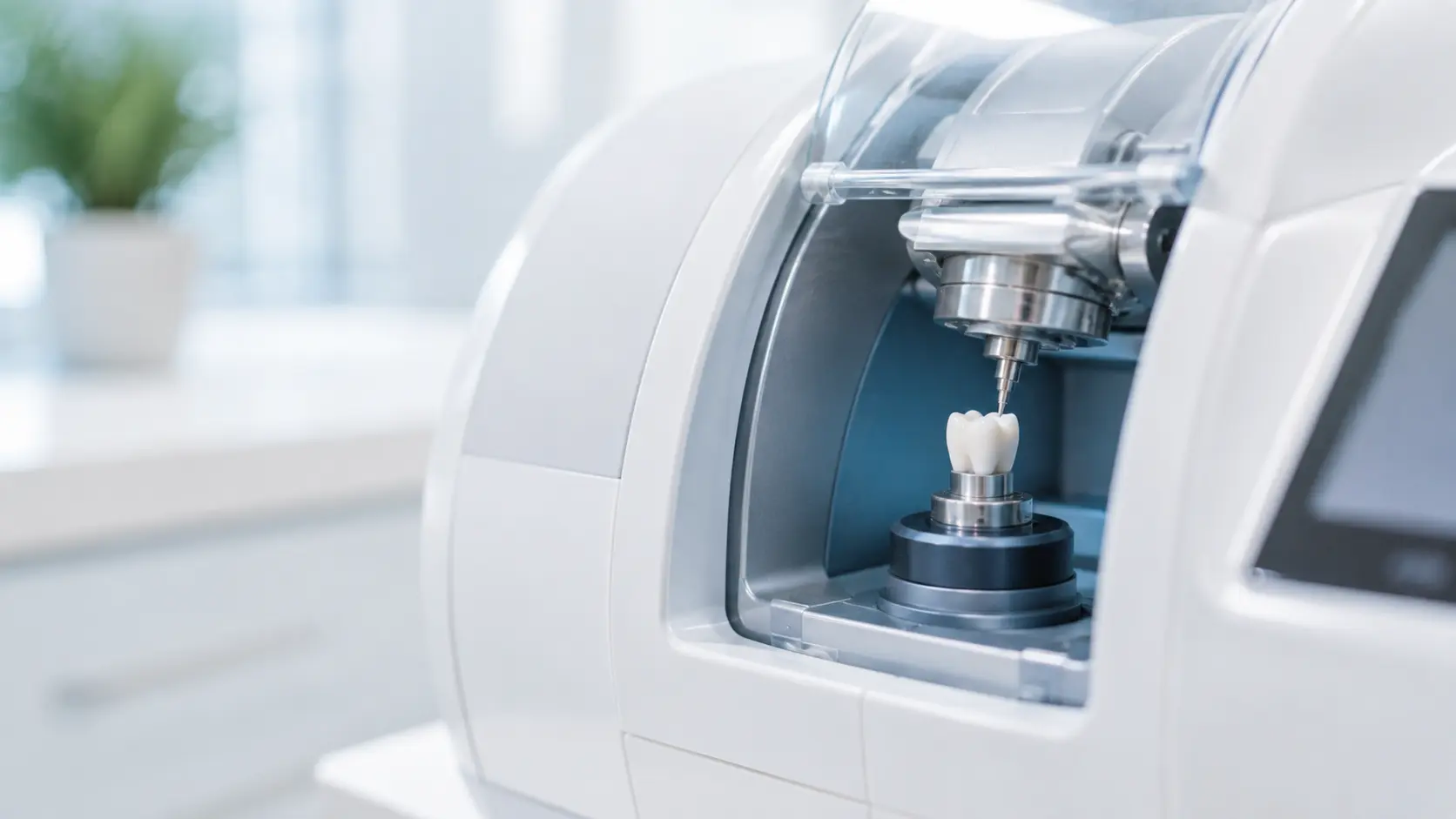
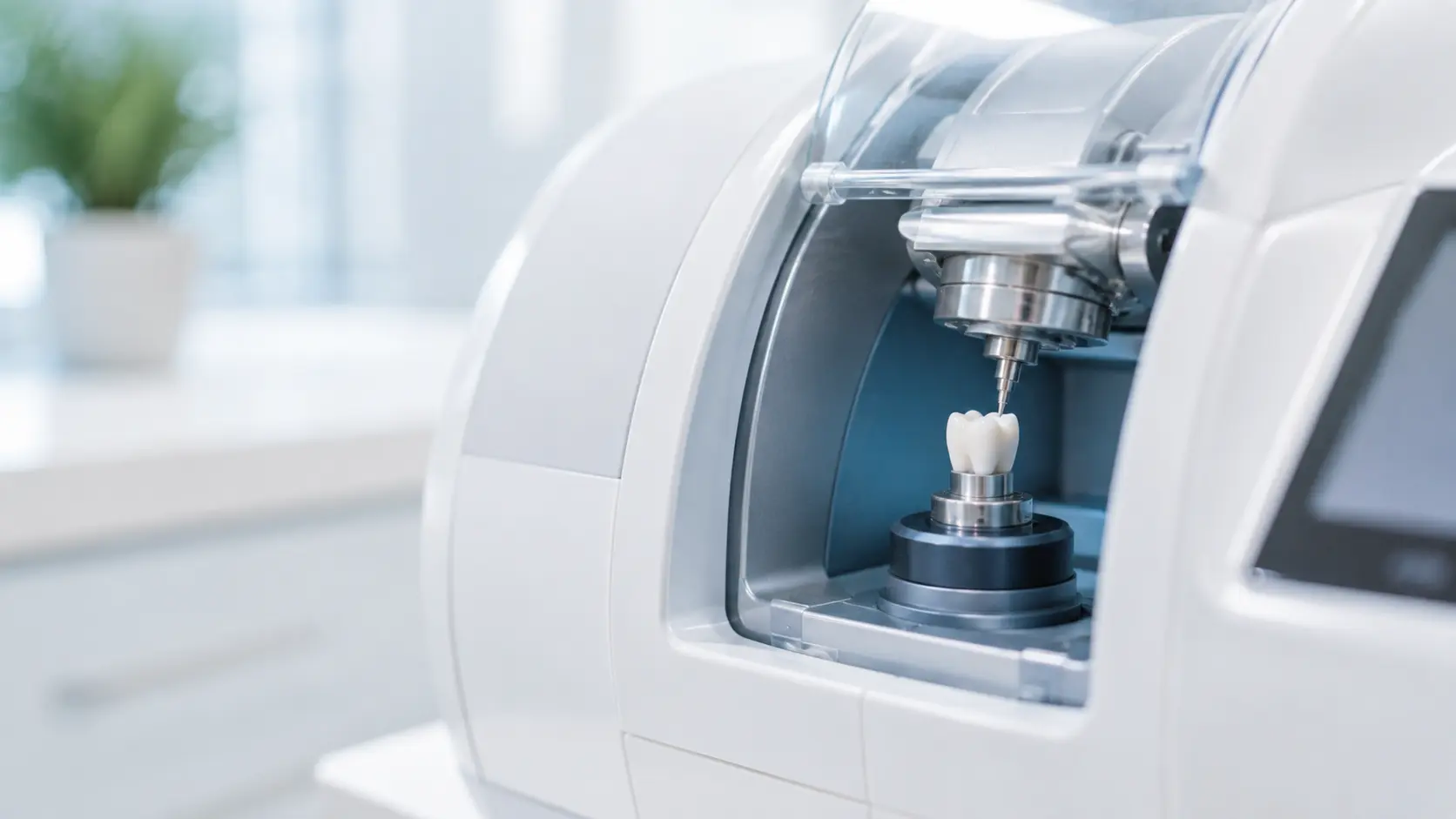
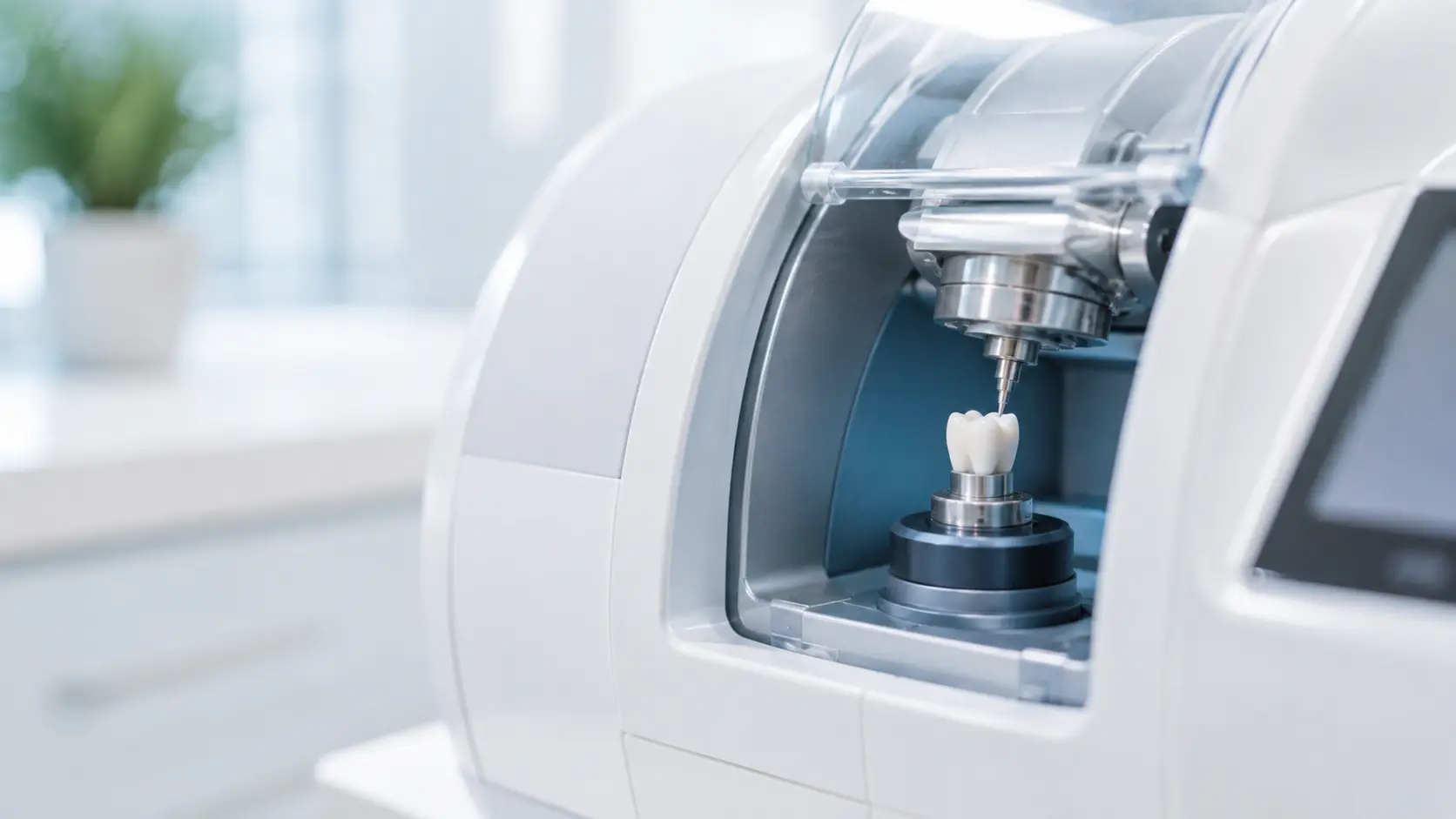
Reeves also provides a digital workflow for selected cases that allows the restoration to be designed and fabricated in the practice. The same-day process can eliminate the traditional temporary-and-return workflow when the case is appropriate.
That technology is valuable because it can simplify the restorative experience. It does not mean every crown should be forced into a same-day workflow simply because the equipment makes it possible.
Whether the tooth needs a crown is still a clinical decision. Material, aesthetic demands and case complexity can also influence how Dr. Reeves chooses to make the restoration.
Tell Dr. Reeves what changed and what you have noticed. A tooth may have broken suddenly, developed discomfort under pressure or simply contain older dental work that now deserves evaluation.
Dr. Reeves considers the remaining natural structure, existing restorations, gums, neighboring teeth and how the tooth contacts the opposing arch. Those details help determine whether a crown is appropriate and how the restoration needs to function.
When crown treatment makes sense, the tooth is shaped to create the appropriate space and foundation for the restoration. Preparation should follow the restorative design rather than removing tooth structure without a reason.
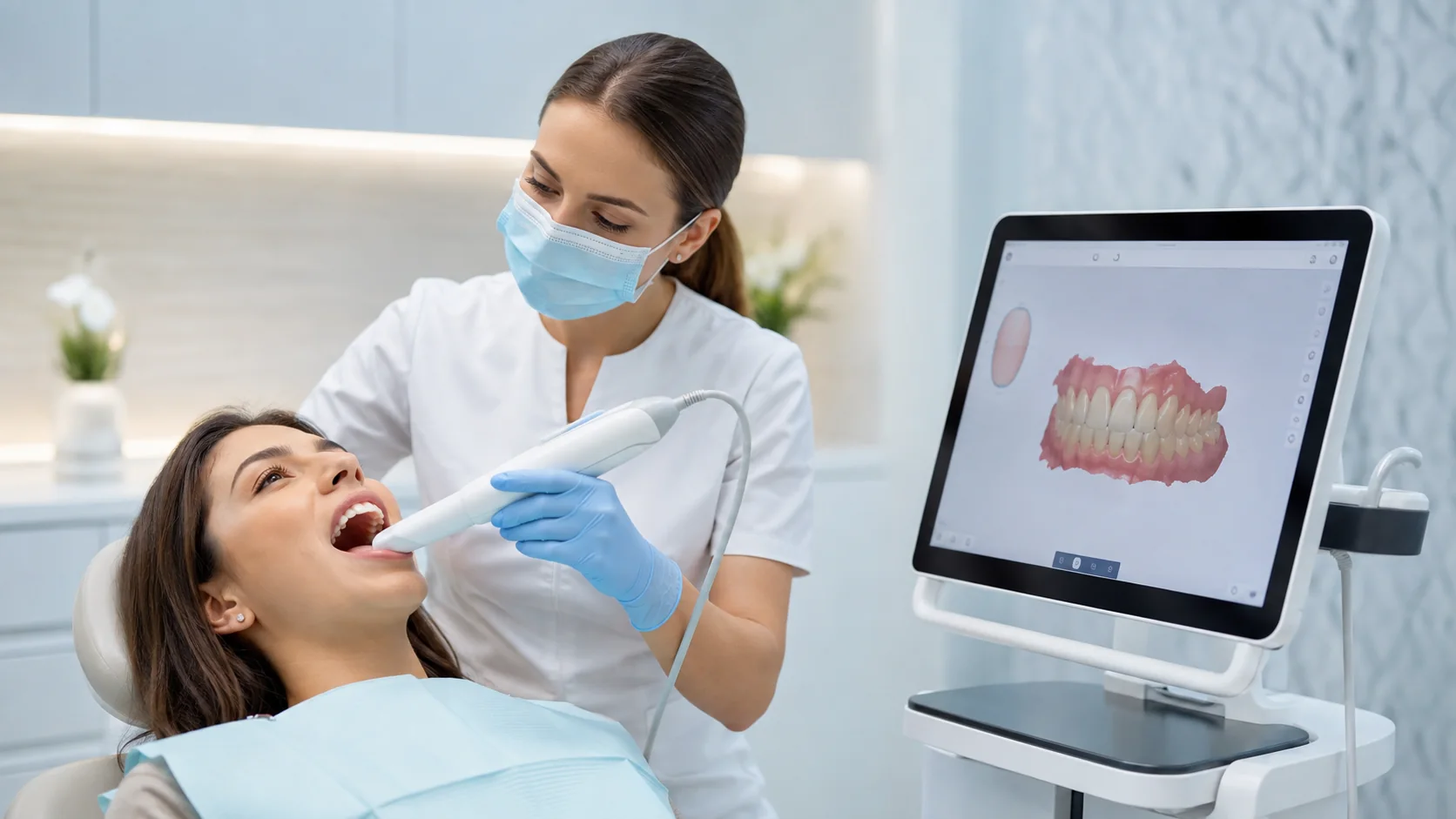
A digital scan or another appropriate record allows the restoration to be designed around the prepared tooth and surrounding teeth. Reeves uses digital restorative technology for selected crown cases.
The final restoration is fabricated according to the planned contour, material and restorative workflow. In selected same-day cases, that manufacturing can happen within the practice during the appointment.
Before final placement, Dr. Reeves can assess the restoration’s fit, neighboring contacts, bite and appearance. A crown is not finished simply because it fits over the prepared tooth.
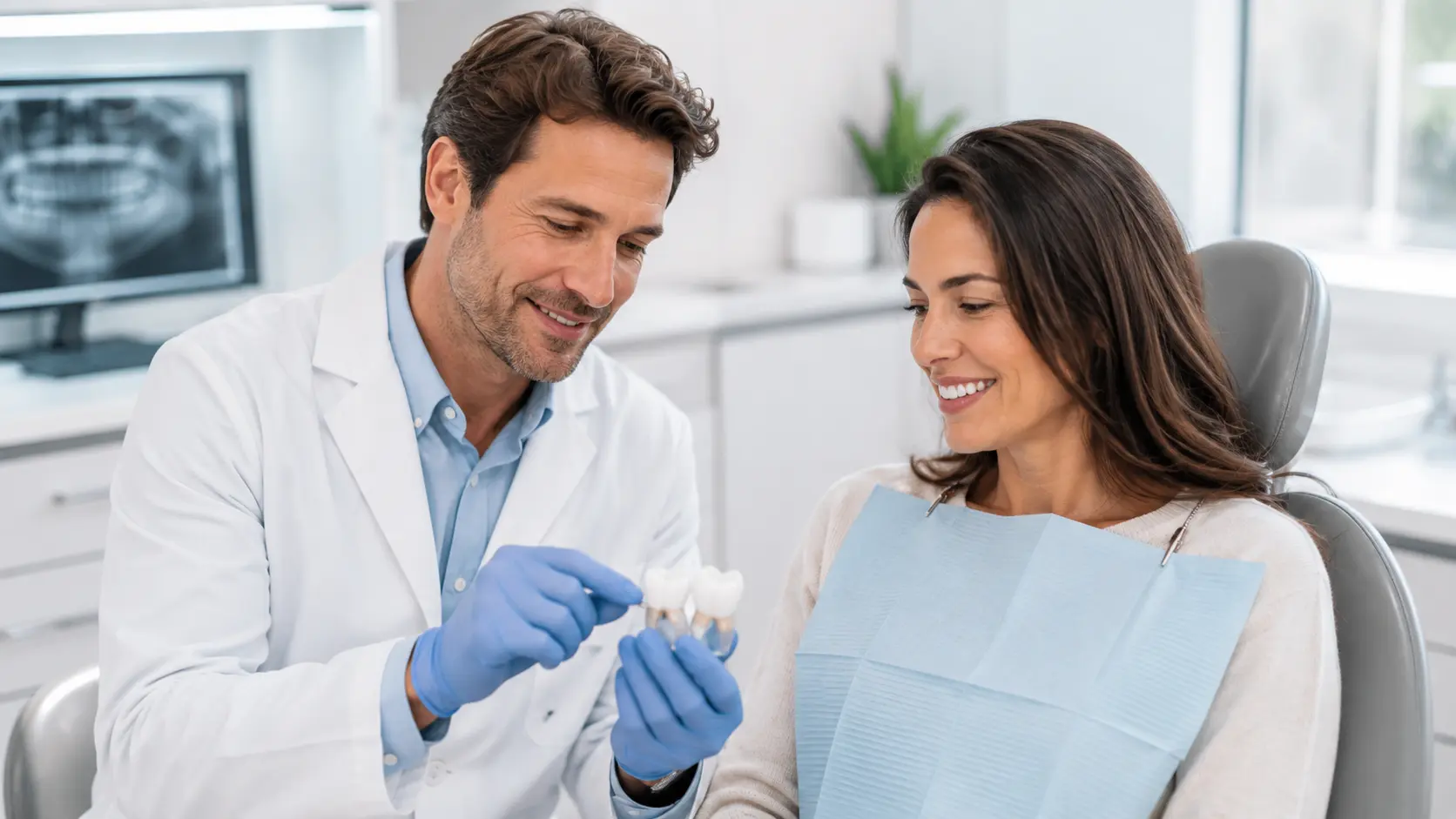
Every time you close your mouth, a crowned tooth interacts with the opposing teeth. During chewing, those contacts shift and distribute forces in ways that matter to both the restoration and the underlying tooth.
That is why the bite cannot be treated as an afterthought. A crown that looks excellent but feels high or receives forces in the wrong place has not solved the complete restorative problem.
Neighboring teeth matter as well. The crown needs appropriate contacts and contours so it behaves like part of the dental arch rather than an isolated restoration.
Good crown treatment is three-dimensional. The tooth underneath, the teeth beside it and the teeth opposing it all belong in the plan.
The restorative requirements of a front tooth do not disappear because appearance matters. The crown still needs to protect the underlying tooth and function within the bite.
But the visual relationships become much harder to ignore. Shape, shade, length, gum position and how light interacts with the restoration can determine whether one crowned tooth feels like part of the surrounding smile.
That is where Reeves’ cosmetic and restorative work naturally overlap. A crown can be necessary for structural reasons while still deserving the same attention to proportion and appearance given to other visible cosmetic treatment.
Appearance has to be considered without compromising why the crown was needed in the first place. Structure and aesthetics belong in the same plan.
A crown can remain in the mouth for years while the tooth, gums and bite around it continue to change. Materials can wear, an edge may feel different and changes around the underlying tooth may eventually become relevant.
That does not mean every old crown needs to be replaced. The age of the restoration by itself is not enough reason to remove dental work that is still functioning appropriately.
Dr. Reeves can evaluate why a crown is being questioned before deciding what should happen next. If replacement is justified, the new restoration can then be planned around the current condition of the tooth rather than simply duplicating something made years earlier.
Dental crowns and dental bridges are closely related restorative treatments, which is why patients often encounter the terms together. They solve fundamentally different starting problems.
A standalone crown is placed over a tooth that remains present. The treatment is about rebuilding and protecting that tooth.
A traditional fixed bridge uses crowns on supporting teeth to hold a replacement tooth within a space where another tooth is missing. Dental implants can also create another replacement path that deserves comparison in some cases.
A crown, bridge and implant can all appear in restorative dentistry, but choosing between them is not like choosing among three versions of the same procedure. Each begins from a different condition of the tooth or missing-tooth space.
A crown usually begins with a natural tooth that is still present and can be restored. The treatment is designed around the remaining tooth structure.
A bridge discussion generally becomes relevant when a tooth is missing and neighboring teeth may be used to support a fixed replacement.
An implant can replace the root portion of a missing tooth and support its own restoration. It becomes another pathway once replacement rather than repair is the problem.
The word crown can sound like a major dental procedure because the restoration covers much of the visible tooth. But when the alternative would be losing a tooth that can still be predictably restored, protecting the remaining natural structure can represent a preservation strategy.
That does not mean every compromised tooth can or should be saved with a crown. The condition of the remaining tooth, extent of damage and other clinical factors determine whether rebuilding is reasonable.
The goal is not simply to keep every tooth at any cost. Preservation still has to be compatible with a sound restorative outcome.

Dr. Coleman Reeves earned his dental degree from the University of Alabama at Birmingham and has developed a particular focus in restorative dentistry. His practice profile identifies crowns, dental implants and full-arch restorations among the complex restorative needs he treats.
That broader restorative perspective matters even when only one tooth appears to need treatment. A crown still exists within a bite, beside other restorations and within a mouth that may have additional restorative needs now or later.
Dr. Coleman can therefore evaluate the individual tooth without losing sight of the larger restorative picture. The objective is not simply to make a crown but to determine how that crown belongs in the mouth.
A new restoration naturally feels different at first because you know work has been completed. The goal over time is for the tooth to return to being something you use rather than something that constantly demands your attention.
Appropriate contacts, bite relationships and contours all contribute to that experience. If a new or existing crown feels noticeably high, unstable or otherwise different in a concerning way, it deserves evaluation rather than assuming every unusual sensation is simply part of having a crown.
The restoration should function as part of the mouth. A crown that constantly reminds you it is there deserves another look.
The crown should integrate with the mouth around it rather than feeling like an isolated object placed over one tooth.
There is no responsible universal lifespan for every dental crown. The underlying tooth, material, design, bite forces, oral hygiene and changes elsewhere in the mouth can all affect how a restoration performs over time.
Grinding or clenching may create different demands than a relatively light bite. Where the crown receives force can matter over time.
Decay, trauma or changes to the supporting tooth can affect the future of the restoration. The crown and natural tooth remain connected clinically.
Normal brushing, interdental cleaning and professional evaluations remain important throughout the life of the restoration. A crown does not eliminate future maintenance.
That does not make crown treatment unpredictable by definition. It means the restoration should continue to be examined and cared for as the mouth changes.
A crown covers the visible portion of the prepared tooth, but it does not make the tooth immune to future problems. The areas where the restoration meets natural tooth structure still need normal oral hygiene and professional evaluation.
Brush normally and clean between the teeth consistently. Regular dental visits also allow Dr. Reeves to evaluate both the crown and the supporting tooth rather than waiting until something becomes obviously wrong.
If you grind or clench, that information can also matter. Reeves provides custom night guards as part of its preventive services for patients dealing with chronic grinding and clenching.
There is not one meaningful crown price that applies to every restorative situation. The condition of the tooth, restorative material, treatment required before final placement and complexity of the case can all affect the actual plan.
A replacement crown can also be a different problem from a first crown on a heavily damaged natural tooth. The same-day workflow may change how a selected restoration is produced without turning every crown into an identical procedure.
After Dr. Reeves examines the tooth, the Reeves team can explain what is being recommended and the associated fee. That conversation becomes more useful once you know why the crown is needed and what treatment is actually included.
Financing availability and terms can change, so current details should be confirmed directly with us.
Reeves provides all-porcelain restorative treatment and digital CAD/CAM crown options. That gives Dr. Reeves more than one restorative workflow to consider depending on what the individual tooth requires.
Selected crowns can be produced through the practice’s same-day digital workflow rather than requiring a traditional temporary and second crown appointment. The technology can simplify treatment when the case is appropriate for it.
Dr. Coleman Reeves’ professional focus includes crowns, dental implants and full-arch restorative treatment. That becomes particularly useful when one damaged tooth is part of a larger restorative picture.
A restoration near the front of the mouth has aesthetic responsibilities in addition to structural ones. Reeves’ cosmetic focus creates a natural overlap when restorative work also needs to relate carefully to the visible smile.
Dr. Todd Reeves established the practice in Greystone in 1997 after earning his dental degree from UAB. The practice has served the Greystone and Highway 280 area for nearly three decades.
Reeves Cosmetic Dentistry is located at 8040 Hugh Daniel Drive in Birmingham, in the Greystone area near the Highway 280 corridor.
If you have been searching for dental crowns in Birmingham, AL, you do not need to determine by yourself whether your damaged tooth needs a crown, a smaller restoration or another approach. Bring Dr. Reeves the tooth that concerns you and let the examination answer that question first.
If a crown is appropriate, the restorative plan can then address material, design and whether the case fits Reeves’ same-day digital workflow. Diagnosis comes first, and the crown gets designed around what the tooth actually needs.
8040 Hugh Daniel Drive
Birmingham, AL 35242
(205) 991-9997
Mon-Thu: 8:00AM – 5:00PM
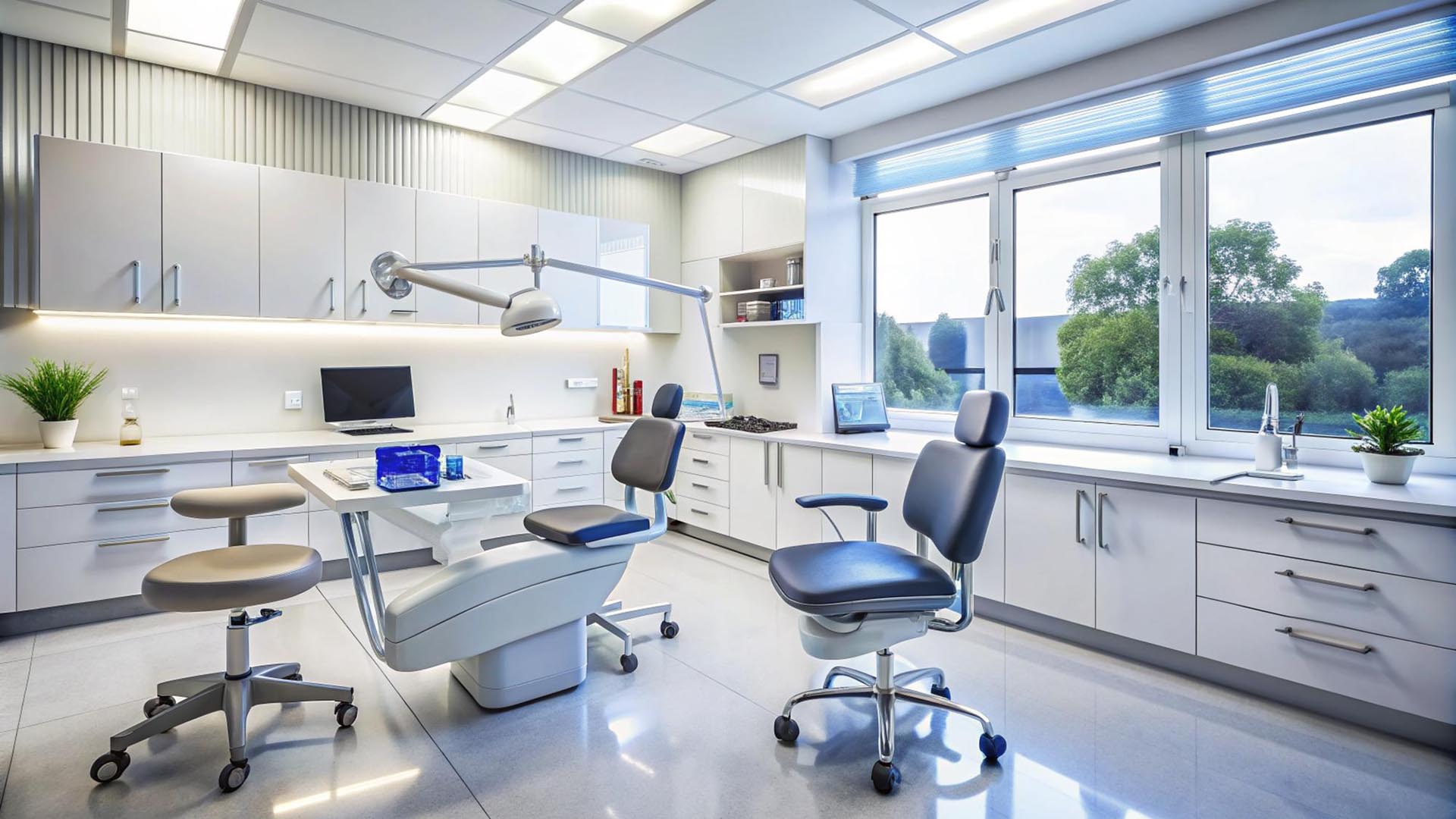
Free parking is available directly in front of the office.
A dental crown is a custom restoration that surrounds the visible portion of a prepared tooth. It can rebuild tooth shape, provide broader coverage for damaged structure and restore the surface that interacts with neighboring and opposing teeth.
A crown may be considered when a tooth is fractured, significantly weakened, heavily restored or otherwise requires broader restorative coverage. Dr. Reeves evaluates how much healthy tooth remains and what forces the tooth must withstand before recommending treatment.
No, because the word crack describes many different situations rather than one standardized restorative problem. The extent, location and effect of the damage all influence whether a crown or another treatment makes sense.
Reeves provides all-porcelain restorations among its restorative options. The practice also uses CAD/CAM technology for selected crown treatment.
Yes, selected crown cases can be completed through an in-office digital workflow. The same-day process can eliminate the traditional temporary-and-return workflow when the case is appropriate.
Yes, the purpose of a same-day crown workflow is to fabricate the final restoration during the treatment visit rather than simply producing a temporary. Whether a particular tooth is appropriate for that workflow still depends on the restorative case.
Neither workflow is automatically better for every tooth. Same-day technology can eliminate several traditional steps, while other restorative circumstances may still favor a different material or laboratory process.
A crown typically restores a tooth that remains present. A traditional bridge replaces a missing tooth by connecting the replacement to restorations supported by neighboring teeth.
Yes, Reeves provides fixed crown-and-bridge treatment. Dental implants are also available and may create another option when a tooth is missing.
The term cap is commonly used by patients to describe a dental crown. Both generally refer to a restoration that covers the visible prepared portion of a tooth.
Yes, when there is a clinical or restorative reason for replacement. The age of a crown alone does not automatically mean it should be removed, so Dr. Reeves can first evaluate the restoration and supporting tooth.
Yes, crowns can be used in visible areas when the tooth requires that type of restorative coverage. Appearance becomes particularly important in those cases because the crown has to relate to the color, contour and proportions of the neighboring teeth.
Ceramic crowns can be designed to relate closely to surrounding teeth. The final appearance depends on factors including material, shade, contour, underlying tooth color and the specific restorative situation.
There is no single lifespan that applies to every crown. The underlying tooth, restorative material, oral hygiene, bite forces, grinding, decay and trauma can all influence how the restoration performs over time.
The natural tooth remains underneath and around the restoration, so normal oral hygiene continues to matter. The transition between crown and natural tooth still needs to be cleaned and evaluated throughout the life of the restoration.
Cost depends on the actual restorative treatment, material, condition of the tooth and any care required before final placement. After Dr. Reeves evaluates the tooth, the office can provide a meaningful estimate based on the proposed treatment.
Dr. Coleman Reeves has a particular focus in restorative care that includes crowns, implants and full-arch restorations. The broader Reeves restorative practice also provides ceramic and same-day digital crown options for selected cases.
You do not need to make that decision before scheduling. Show Dr. Reeves what has changed, and he can evaluate the remaining tooth structure, previous dental work and bite before explaining the restorative options.
Maybe a tooth broke while you were eating, or maybe an old filling has slowly become a much larger problem. You may also have a crown that no longer looks or feels the way it once did and want to know whether anything actually needs to be done.
You do not need to decide that the answer is a crown before the appointment. Dr. Reeves can first determine what remains, what needs protection and how much dentistry the tooth actually requires.
If a crown is the right answer, the next decisions become much clearer. Material, design and whether a same-day digital workflow makes sense can all follow from the condition of the tooth.
Request a crown consultation online or call the Greystone office directly.

Personalized cosmetic, restorative, implant and family dentistry in Greystone, Birmingham, Alabama.
Copyright © 2027 All Rights Reserved.