
Greystone, Birmingham•Serving patients since 1997

Sometimes it is cracked. Sometimes an old restoration has started to fail.
A tooth may have lost enough structure that it no longer feels predictable under pressure. Or a tooth may already be missing, leaving the question of what should take its place.
Restorative dentistry is about solving those problems in a way that makes sense for the tooth, the bite and the rest of the mouth—not simply filling the space with dental work.
Dr. Todd Reeves and Dr. Coleman Reeves provide restorative care ranging from porcelain crowns and dental bridges to dental implants and more comprehensive restorative treatment.
The first decision is not which restoration to make. It is what the tooth actually needs.
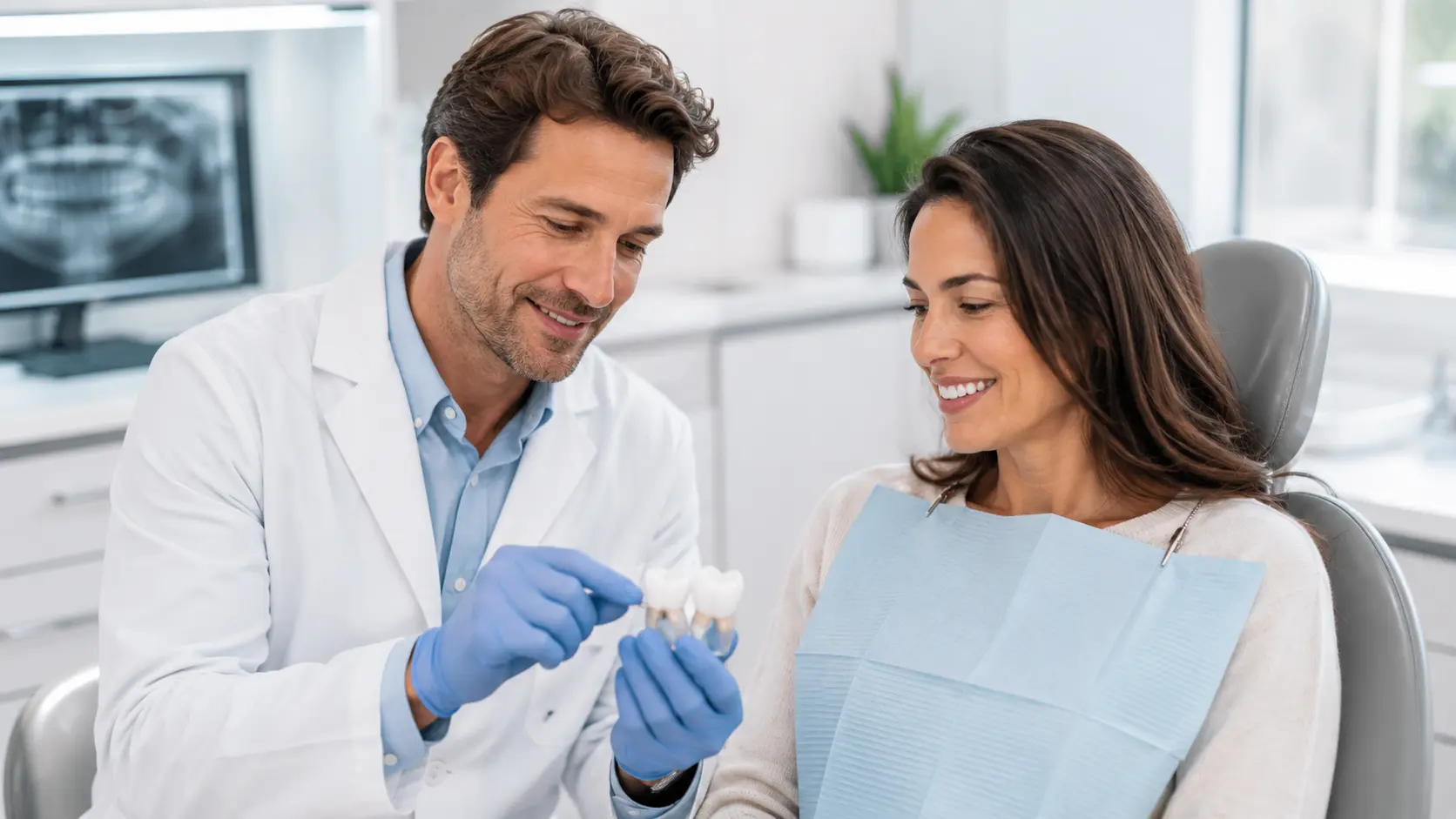
The restoration should follow the problem—not the other way around.

When a tooth is damaged, it is easy to focus on what has been lost. Dr. Reeves also looks at what remains.
How much healthy tooth structure is still present? Where is the damage? What forces will the tooth experience when you bite?
Is an existing restoration part of the problem? Can the tooth reasonably be rebuilt, or has the situation reached a point where another solution needs to be considered?
Those questions determine the treatment. A crown should not be placed simply because a crown can be made.
A missing tooth should not automatically become a bridge simply because there is a gap. Good restorative dentistry starts by understanding the problem before choosing the restoration.
Restorative dentistry addresses teeth that have been damaged, weakened, lost or affected by previous dental treatment. The word restore is useful because the objective is larger than making something look complete again.
Dr. Reeves may evaluate restorative treatment when you notice concerns such as:
A fracture may involve only part of the visible tooth, or it may affect how predictably that tooth can handle chewing forces.
The location and extent of the damage influence what happens next.
Decay, fractures and previous dental work can leave less natural tooth available to support normal function.
The amount of remaining tooth structure matters when deciding how the tooth should be restored.
Dental restorations are not permanent.
An older restoration may eventually need evaluation because of wear, fracture, fit, appearance or changes to the tooth around it.
Once a tooth is gone, the restorative conversation changes from repairing tooth structure to replacing what is missing.
Dental bridges and implants may both enter that discussion.
Sometimes there is no single tooth to fix.
Wear, older dental work, missing teeth and damaged teeth may need to be considered together so one treatment does not conflict with another.
Crowns, bridges, implants and more comprehensive care each solve a different restorative problem. Start here, then go deeper on the service that fits your situation.
A crown covers a tooth when more comprehensive protection or rebuilding is needed than a smaller restoration can provide.
Reeves currently provides all-porcelain crowns and uses CAD/CAM technology for selected digital restorations.
A fixed dental bridge replaces a missing tooth or teeth by connecting the replacement tooth to supporting teeth.
A bridge may make sense in some situations; in others, Dr. Reeves may discuss an implant-supported approach instead.
An implant replaces the root portion of a missing tooth and can support the restoration that replaces the visible tooth.
Implants can also become part of larger restorative plans involving multiple missing teeth. Reeves currently lists dental implants among its restorative services.
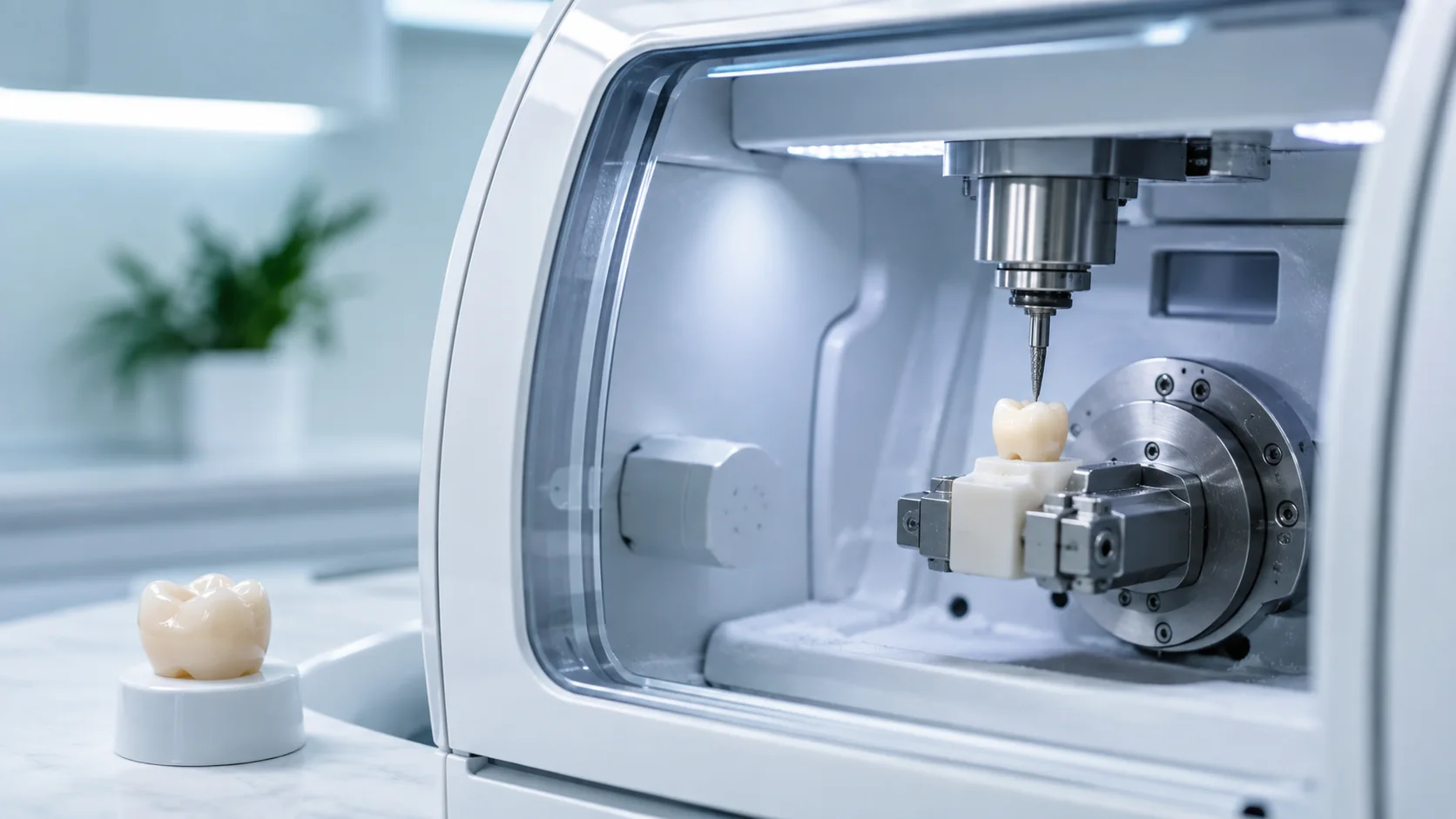
Reeves uses CAD/CAM technology for selected restorations, allowing certain crowns and bridges to be designed and completed within a much shorter treatment window than a traditional laboratory workflow. The current practice site specifically advertises same-day crowns and bridges.
When several teeth are damaged, missing or affected by older dentistry, the treatment may need to be planned as a larger system rather than a series of unrelated repairs.
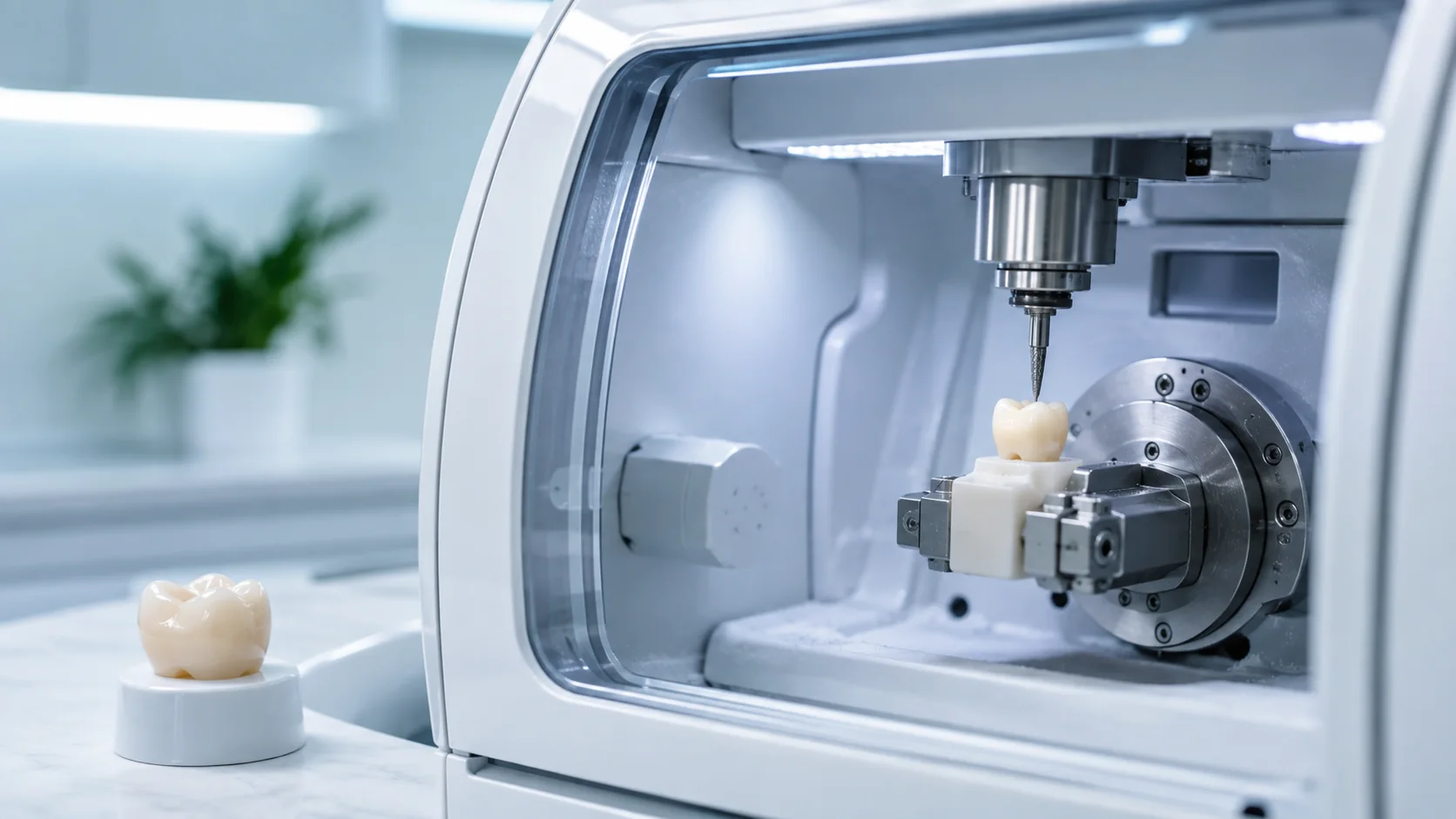
A crown surrounds the visible portion of a tooth.
That makes it useful when the problem involves more tooth structure than a smaller restoration can predictably address.
Dr. Reeves may discuss a crown when a tooth has been significantly weakened, fractured, heavily restored or otherwise needs broader coverage and support.
But “damaged tooth” does not automatically mean “crown.”
The amount of healthy tooth remaining, location of the damage, previous treatment and forces on the tooth all matter.
Reeves currently uses all-porcelain restorations and CAD/CAM technology for selected crowns.
It needs to belong in the bite. It needs to contact neighboring teeth appropriately. It needs to protect the tooth it was made for. And in a visible area, it should also relate naturally to the surrounding smile.
A dental bridge is a fixed restoration designed to fill a space where one or more teeth are missing.
The replacement tooth is supported by restorations connected to neighboring teeth. Reeves currently provides crown-and-bridge treatment.
That does not automatically make a bridge the best solution for every missing tooth. The condition of the neighboring teeth matters.
So does the location of the missing tooth. The bite matters. The number of missing teeth matters. And dental implants create another restorative path that should sometimes be compared before a decision is made.
The useful question is not: “Can we put a bridge here?”
It is: “What is the strongest way to replace this tooth within the condition of this mouth?”
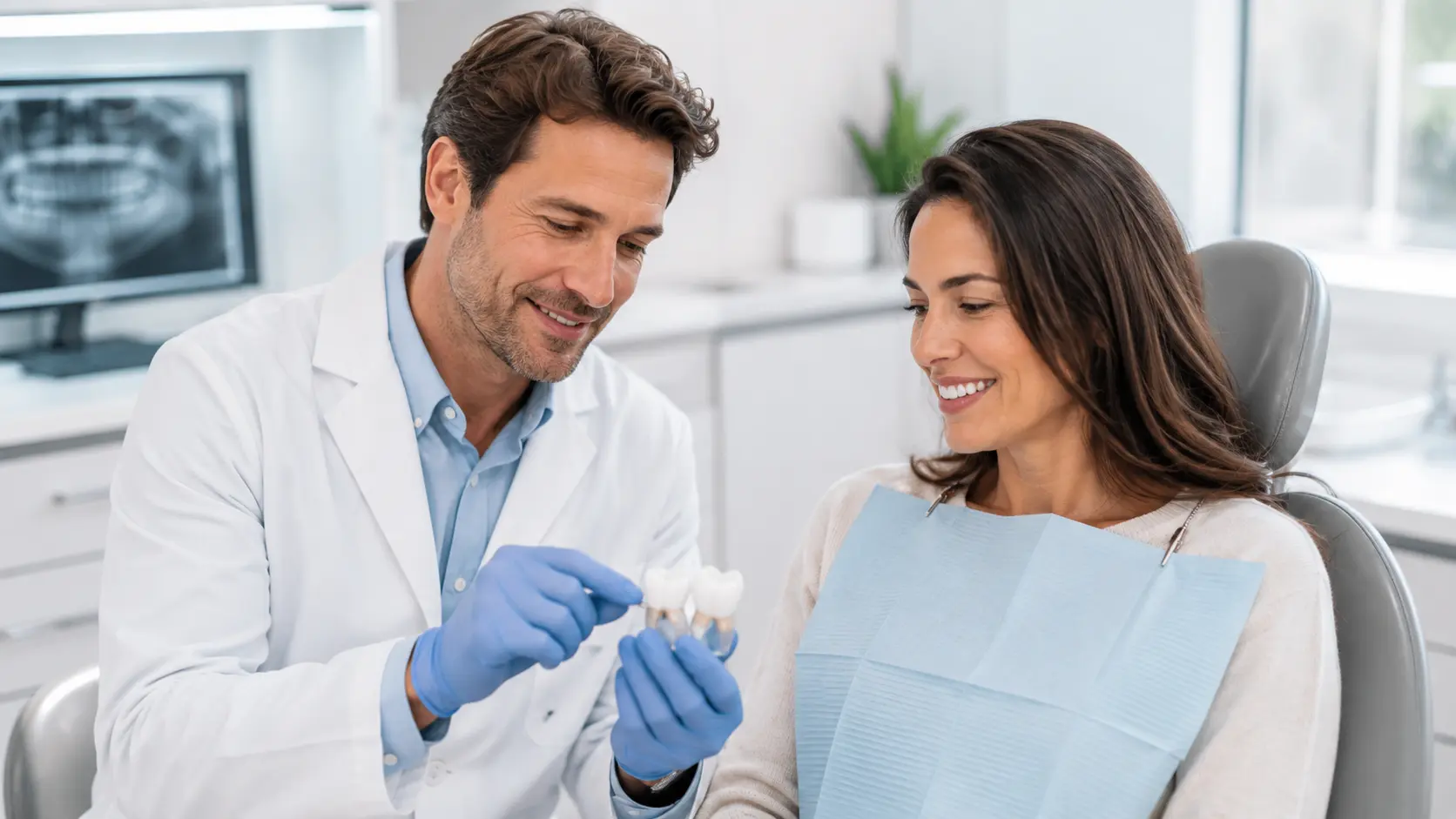
A missing tooth creates a straightforward-looking problem.
The solution is not always straightforward.
Traditional fixed bridges rely on supporting teeth beside the missing space.
That can be appropriate when those teeth are already candidates for restorations or when other clinical factors favor a bridge.
An implant is placed in the missing-tooth site and supports its own restoration rather than relying on crowns placed over neighboring teeth.
That can be an important advantage when adjacent teeth are otherwise healthy.
Reeves’ current implant information specifically discusses this distinction between treating the missing-tooth site itself and using neighboring teeth to support a conventional bridge.
Bone, gum health, neighboring teeth, bite, anatomy, medical considerations and the overall treatment plan can all influence what makes sense.
Dr. Reeves can explain the tradeoffs after evaluating the actual space.
—
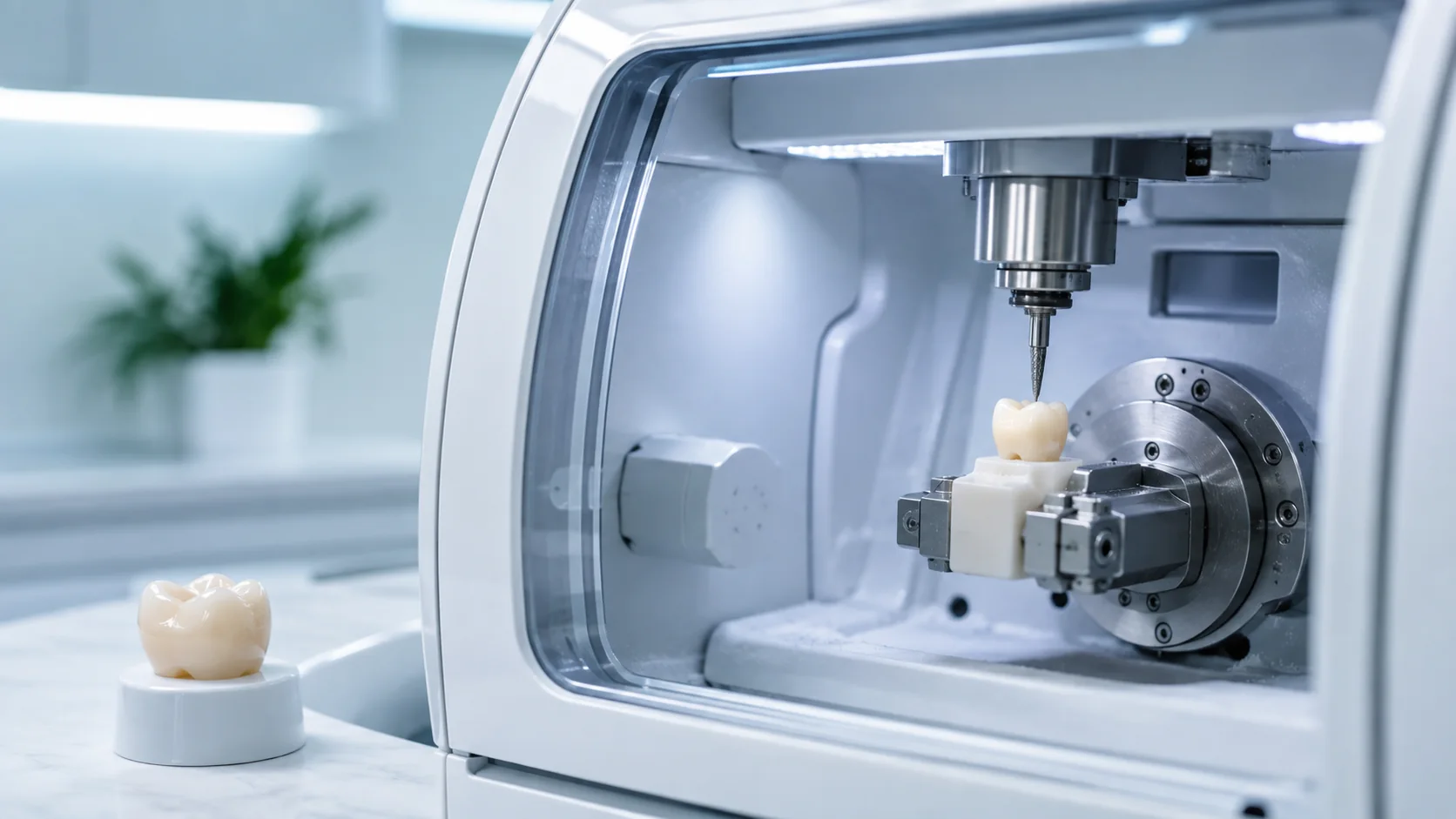
Traditional crown treatment commonly involves preparing the tooth, making records, placing a temporary restoration and waiting while a dental laboratory fabricates the final crown.
Digital dentistry can change that workflow.
Reeves currently uses CAD/CAM technology for selected crowns and bridges and advertises same-day restorative treatment.
Digital records allow the restoration to be designed with precision and, in appropriate cases, fabricated without the traditional laboratory delay.
That can mean:
The technology should shorten the process. It should not shorten the planning.
There is a major difference between rebuilding a compromised tooth and replacing one that cannot reasonably be maintained.
The decision deserves care.
If a tooth can be predictably restored, preserving it may be the stronger path.
If too little healthy structure remains—or the condition of the tooth makes long-term restoration unfavorable—continuing to place more dentistry on that tooth may not solve the underlying problem.
That is why comprehensive restorative treatment cannot be reduced to a menu:
Crown. Bridge. Implant. Pick one.
Dr. Reeves looks at what remains, what can be rebuilt and what the tooth will need to withstand afterward.
Sometimes the restorative decision is about saving what is there.
Sometimes it is about recognizing when another solution should be discussed.
A single damaged tooth may have a relatively contained solution.
The picture changes when several things are happening at once.
Maybe there are older crowns.
A missing tooth.
Wear on the front teeth.
Another tooth with a large restoration.
And a bite that has adapted around all of it.
Treating each tooth independently may produce individual restorations that do not work particularly well together.
A comprehensive plan considers:
Dr. Coleman Reeves’ restorative focus includes crowns, implants and full-arch restorations, making more involved restorative planning an important part of the Reeves practice.
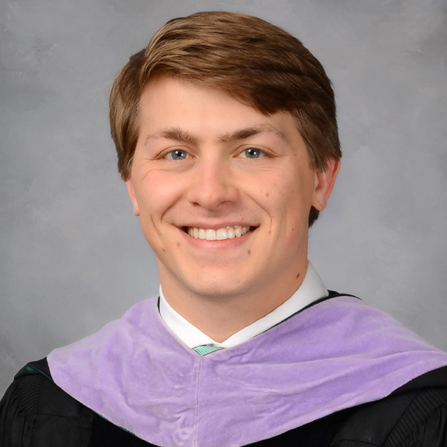
Dr. Coleman Reeves grew up around the Greystone practice before following his father into dentistry.
After earning his dental degree from the University of Alabama at Birmingham, he continued developing his skills in restorative care, including dental crowns, dental implants and full-arch restorations.
That training is particularly relevant when the restorative problem extends beyond one isolated tooth.
A missing tooth may affect what happens beside it.
A crown may become part of an implant restoration.
Several compromised teeth may need to be planned together.
The objective is to understand those relationships before the first restoration is made.
Restorative dentistry and cosmetic dentistry are often treated as two separate categories.
Real teeth are not divided that neatly.
A crown on a back tooth needs to withstand function.
A crown near the front of the smile also needs to look like it belongs there.
A bridge replaces function, but the replacement tooth still has shape, proportion and color.
An implant restoration must relate to the gumline and neighboring teeth in addition to replacing what is missing.
Dr. Reeves considers both sides of the restoration.
A tooth broke.
Something hurts when you chew.
A crown feels different.
A tooth is missing.
Or maybe you have several older restorations and no longer know where to begin.
Start there.
Dr. Reeves examines remaining tooth structure, existing dentistry, neighboring teeth, gums and bite relationships.
Before replacing anything, the condition of the natural tooth and surrounding structures needs to be understood.
A crown may solve one problem. A bridge or implant may address another.
More complicated situations may involve several treatments working together.
When multiple teeth are involved, order matters. Necessary treatment should be coordinated rather than completed as disconnected procedures.
Once the plan is clear, treatment moves from diagnosis into rebuilding.
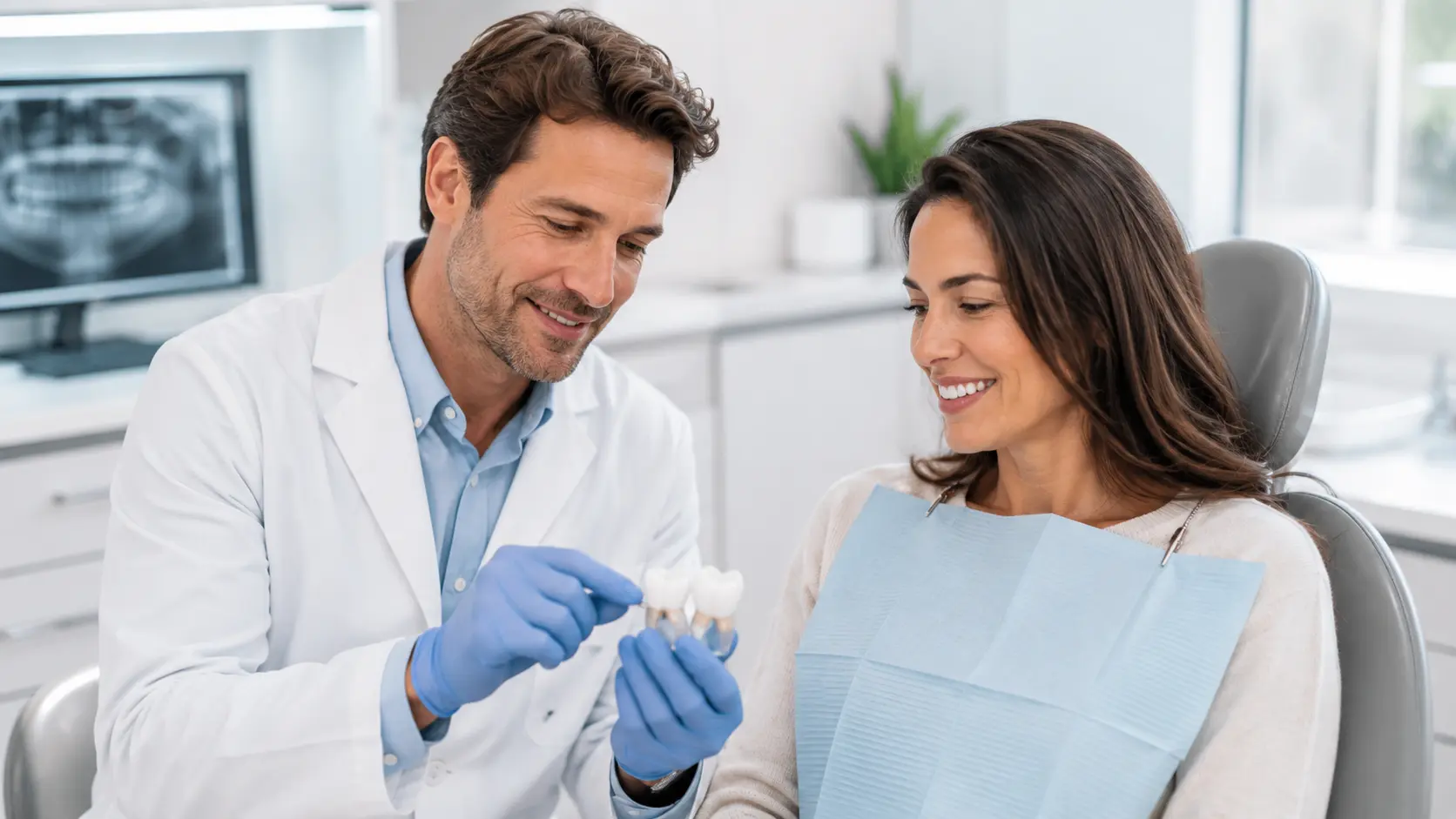
Every restoration eventually meets something. A neighboring tooth. An opposing tooth. Food. Chewing forces. Sometimes grinding or clenching.
That makes the bite part of restorative treatment even when the original problem seems confined to one tooth.
A beautifully shaped crown that feels too high when you close is not finished dentistry. A bridge needs enough support for the forces it will receive.
Implant restorations also have to be designed around how the mouth functions.
The restoration has to belong to the whole system, not simply the prepared tooth.
A crown or bridge does not have to fall out before it deserves attention. Existing dental work can change over time. Materials wear. Teeth around restorations can change. Gums can move.
A restoration that once blended well may become more obvious. An edge may feel different. Or dental imaging and examination may reveal a problem you cannot see yourself.
That does not mean every older restoration needs replacement. Age alone is not the diagnosis.
Dr. Reeves can evaluate why the restoration is being questioned and whether replacement is actually justified.
There is no meaningful single price for “restorative dentistry.”
A porcelain crown is different from replacing a missing tooth with a bridge.
An implant-supported restoration is different again.
A comprehensive restorative plan involving several teeth may combine multiple procedures over a longer period.
Cost can be influenced by:
After the examination, the Reeves team can explain what Dr. Reeves is recommending and the associated fees.
The number becomes useful once you know what problem is actually being solved.
After the examination, the Reeves team can explain the recommended treatment and associated fees.
CareCredit is currently listed as a financing option. Availability and terms can change, so confirm current details with the office.
Crowns, bridges, implants and more involved restorative planning can be coordinated within the practice rather than viewed as unrelated procedures.
CAD/CAM technology allows Reeves to complete selected ceramic crowns and bridges on an accelerated digital workflow.
Dr. Coleman Reeves’ current professional profile specifically emphasizes restorative dentistry, crowns, implants and full-arch restorations.
Restorative work in the visible smile can be planned alongside the cosmetic considerations already central to the practice.
Dr. Todd Reeves established the practice in Greystone in 1997 after earning his dental degree from UAB.
Reeves Cosmetic Dentistry is located at 8040 Hugh Daniel Drive in Birmingham, in the Greystone area near the Highway 280 corridor. The office currently lists `(205) 991-9997` as its main phone number.
If you have been searching for a restorative dentist in Birmingham, AL, you do not need to know whether the solution is a crown, bridge, implant or something more comprehensive before scheduling.
Bring the problem. A broken tooth. An older restoration. A missing tooth. Several teeth that no longer feel dependable.
Dr. Reeves can evaluate what remains, what needs to be rebuilt and what treatment path makes sense.
8040 Hugh Daniel Drive
Birmingham, AL 35242
(205) 991-9997
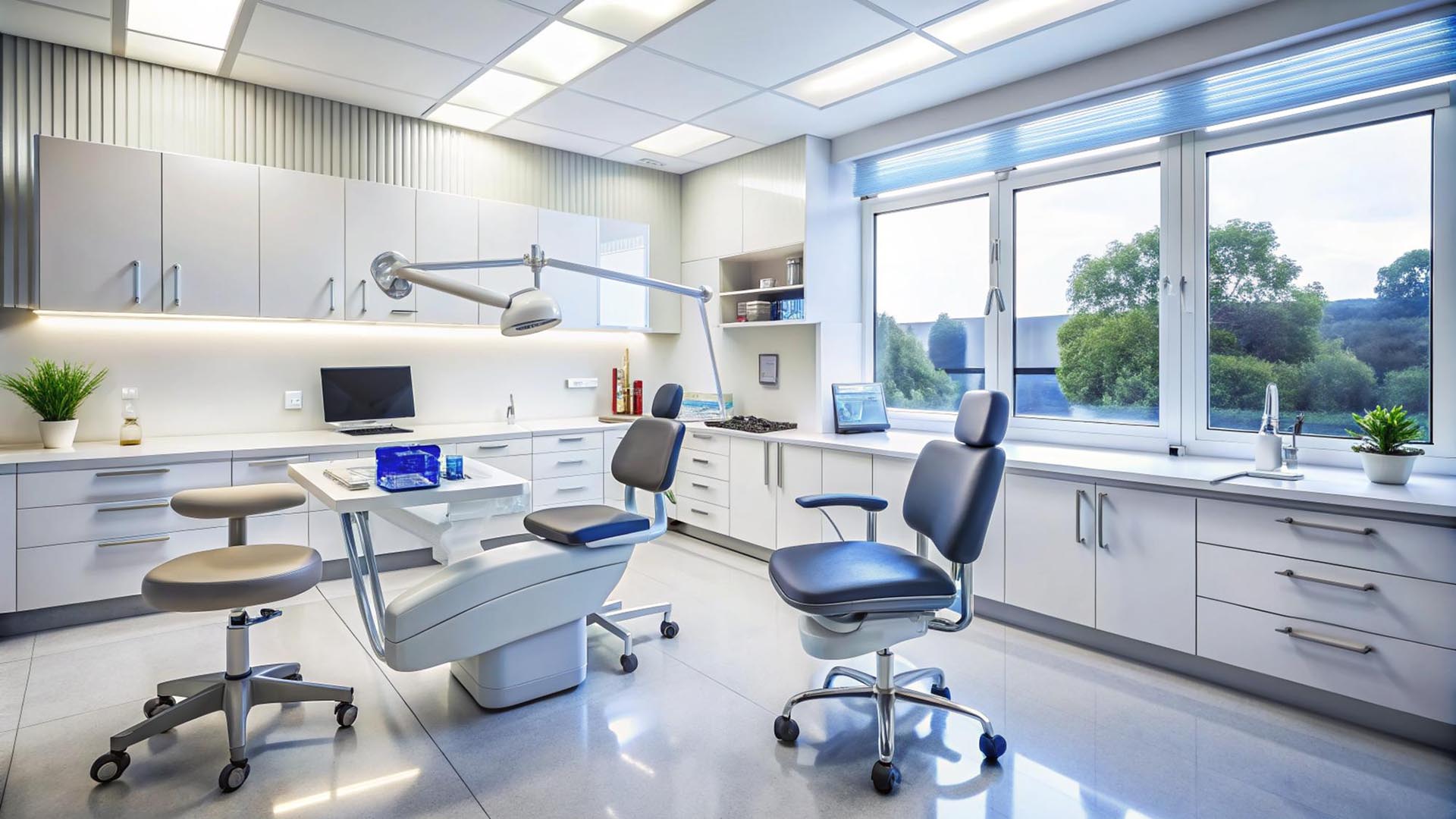
Free parking is available directly in front of the office.
Restorative dentistry focuses on repairing or replacing damaged, weakened or missing teeth. Treatment may include dental crowns, bridges, implant-supported restorations and more comprehensive restorative care depending on the condition of the mouth.
Restorative dentistry primarily addresses dental health, structure and function. Cosmetic dentistry is more directly focused on appearance.
The two can overlap. A front crown, for example, needs to rebuild a tooth while also relating naturally to the surrounding smile.
A crown may be considered when a tooth has lost enough structure or strength that broader coverage is appropriate. Fractures, large previous restorations and other structural problems can influence that decision.
Dr. Reeves evaluates the individual tooth before recommending a crown.
Yes. Reeves currently uses CAD/CAM technology and advertises same-day crowns and bridges for selected restorative cases.
A fixed bridge replaces a missing tooth or teeth using restorations supported by neighboring teeth.
Reeves currently provides crown-and-bridge treatment.
Neither treatment is universally better.
A bridge relies on neighboring teeth for support. A dental implant occupies the missing-tooth site and supports its own restoration.
The condition of neighboring teeth, bone, gums, bite and other clinical factors help determine which approach makes more sense.
Yes. Dental implants are currently listed among Reeves’ restorative services.
Potentially. When several teeth are damaged, missing or heavily restored, treatment may need to be coordinated as a comprehensive plan rather than a series of isolated procedures.
Dr. Coleman Reeves’ current profile specifically includes full-arch restorative care among his restorative focus areas.
Yes, when replacement is clinically appropriate. Age alone does not necessarily mean a crown needs to be replaced. Dr. Reeves can evaluate the restoration, underlying tooth, fit, function and surrounding tissues.
Ceramic restorations can be designed to relate closely to surrounding natural teeth. Reeves currently uses all-porcelain restorations and digital restorative technology.
The experience depends on the problem and procedure, so Reeves does not present restorative dentistry as universally “painless.”
Dr. Reeves can explain what the proposed treatment involves and what to expect once the diagnosis is clear.
There is no universal lifespan for every crown, bridge, implant restoration or restorative case.
Material, location, bite forces, oral hygiene, underlying tooth condition and other factors all influence longevity.
Cost depends on what is being restored and the treatment required. A single crown, dental bridge, implant restoration and multi-tooth rehabilitation are fundamentally different cases.
The office can provide a meaningful estimate once Dr. Reeves has evaluated the problem and developed the treatment plan.
CareCredit is currently listed as a financing option. Availability and terms can change, so confirm current details with the office.
You do not need to decide before the appointment.
Tell Dr. Reeves what has changed, what feels wrong or what dental work concerns you. After evaluating the tooth or teeth, he can explain which options fit the condition of the mouth.
---
Maybe one tooth broke yesterday. Maybe a crown that has been there for years no longer feels quite right. Maybe you have been living around a missing tooth.
Or maybe enough dental work has accumulated over time that you no longer know which problem should come first.
You do not need to build the restorative plan yourself. That is the reason for the consultation.
Dr. Reeves can evaluate what can be preserved, what needs rebuilding and how the pieces should fit together before treatment begins.
Request a Restorative Consultation
Call (205) 991-9997
Request a restorative consultation online or call the Greystone office directly.

Personalized cosmetic, restorative, implant and family dentistry in Greystone, Birmingham, Alabama.
Copyright © 2027 All Rights Reserved.