
Greystone, Birmingham•Serving patients since 1997

Losing a tooth creates a different restorative problem from damaging one. Once the natural tooth is gone, the question becomes what should occupy that space and how the replacement should be supported.
A dental implant creates a foundation within the jaw for a replacement tooth rather than relying on neighboring teeth for the same type of support as a conventional bridge. Dr. Todd Reeves and Dr. Coleman Reeves provide restorative treatment at Reeves Cosmetic Dentistry, including dental implant care as part of broader plans for damaged and missing teeth.
The implant itself is only one part of the treatment. The replacement still has to be planned around the bone, gums, bite, neighboring teeth and the final tooth that needs to exist above it.
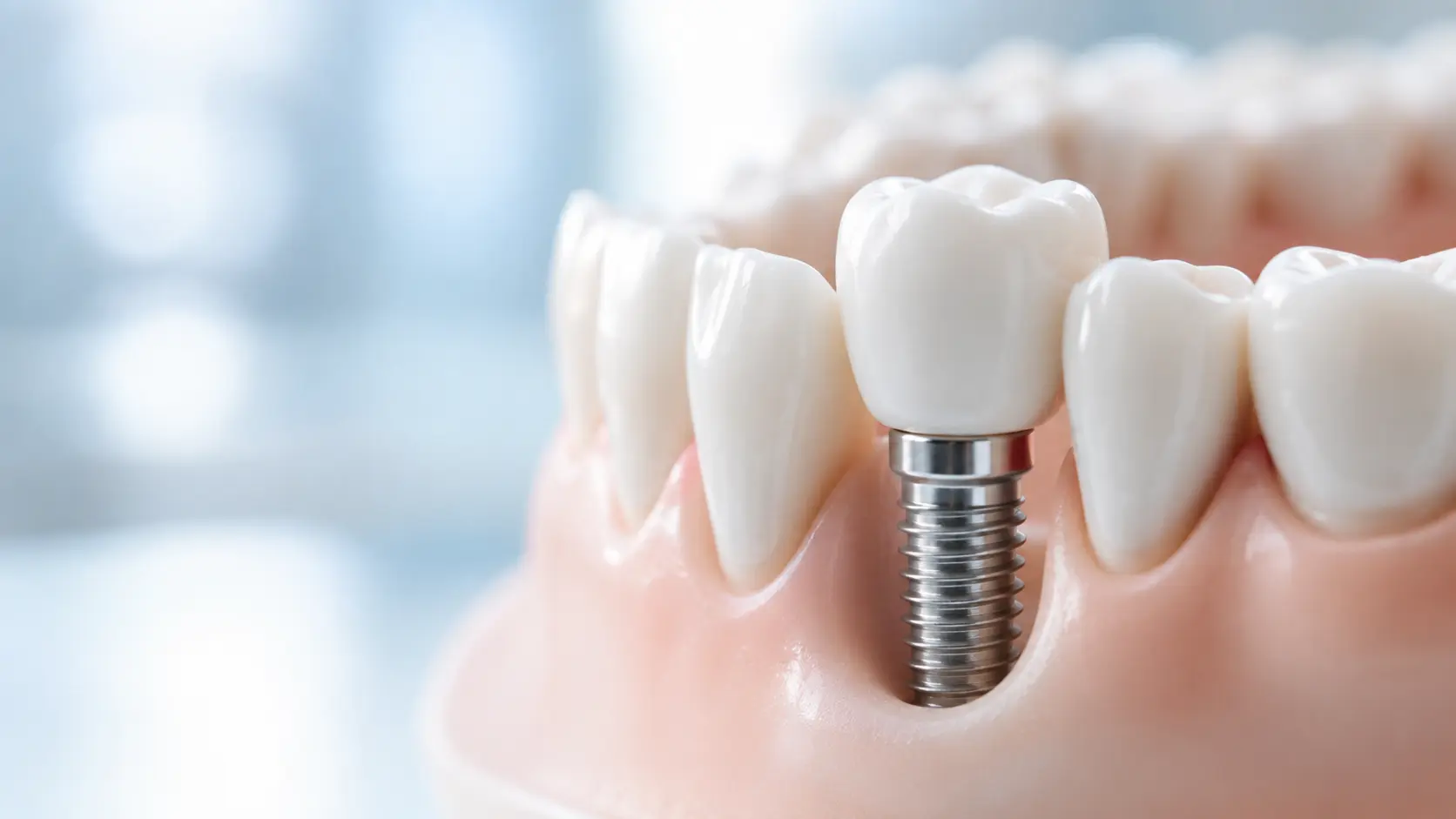
Planning has to connect the surgical site, restorative design, neighboring teeth and bite.

It is easy to look at a missing tooth and think the problem is simply the gap. Dr. Reeves also has to consider why the tooth was lost, what condition the surrounding structures are in and what the replacement will eventually need to withstand.
The teeth beside the space matter, and the opposing bite matters too. Bone and gum conditions can also influence whether implant treatment makes sense and what needs to happen before the final restoration can be made.
A dental implant should not be chosen simply because implants are available. The treatment should fit the missing-tooth problem, the condition of the mouth and the long-term restorative plan.
People often use the word implant to describe the entire replacement tooth. Technically, several components work together to create the finished restoration.
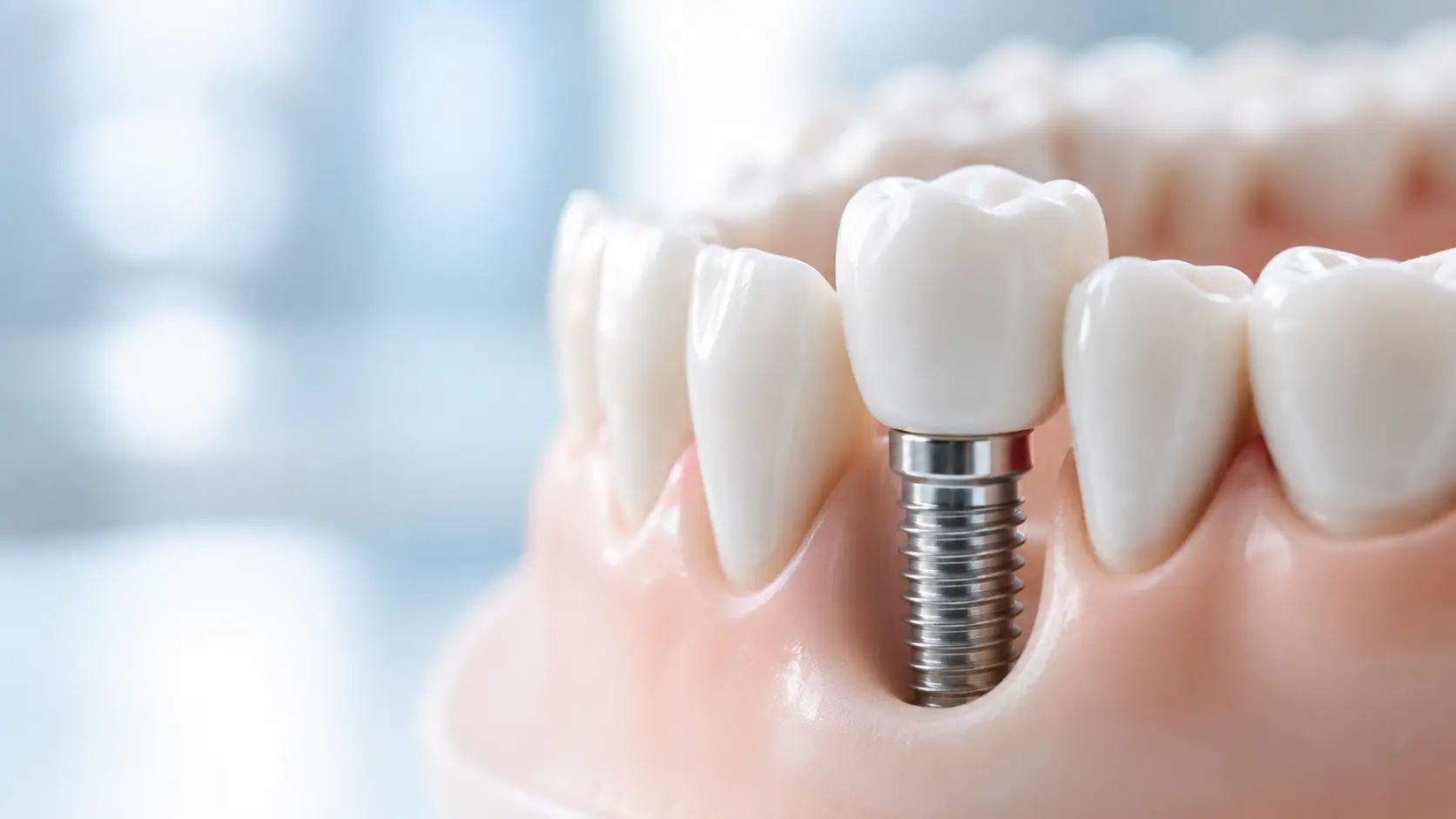
The implant fixture is surgically positioned in the jawbone and functions as the foundation for the replacement. It is designed to integrate with the surrounding bone during healing so that it can later support the restorative components above it.
An abutment connects the implant foundation below the gums to the restoration above it. Its design contributes to the transition between the implant and the visible replacement tooth.
For one missing tooth, the visible restoration is commonly an implant-supported crown. When several teeth are missing, implants may instead support a bridge or a larger prosthetic restoration.
The crown, bridge or other restoration replaces what you actually see and use above the gumline. Both parts have to be considered in the plan.
Implant placement is the surgical phase of treatment. The implant fixture is positioned within the jawbone, and healing then allows the surrounding bone to integrate around it over time.
Implant restoration is the restorative phase. Once the implant is ready to support the replacement tooth, an abutment and crown, bridge or other restoration can be designed to complete treatment.
Treatment planning should connect those two parts rather than treating them as unrelated procedures.
A missing tooth can change the way you chew on that part of the mouth. The surrounding teeth and the opposing tooth can also become part of the treatment discussion because the space no longer functions the way it did when a natural tooth occupied it.
The bone in a missing-tooth area can change over time as well. How meaningful those changes are varies from patient to patient, which is another reason Dr. Reeves evaluates the actual site instead of treating every missing tooth as the same situation.
The replacement decision deserves more thought than simply filling a visible gap. Dr. Reeves needs to understand what has been lost and what the replacement needs to restore.
There is no single adult age at which someone automatically becomes too old for dental implant treatment. General health, oral health and the ability to heal may be more significant than chronological age alone.
Implant treatment begins with a tooth that is already gone or a situation where replacement is being considered. If a natural tooth can still be predictably restored, preservation may deserve discussion before replacement.
An implant needs an appropriate foundation within the jaw. Some patients have enough bone at the site, while others may require additional evaluation or grafting before placement can be considered.
The implant emerges through the gum tissue into the mouth, so the condition of those tissues matters. Existing inflammation or periodontal concerns may need to be addressed as part of treatment planning.
Medical history and medications can influence surgery and healing. Those factors belong in the implant conversation before treatment begins rather than being treated as unrelated health information.
Tobacco can interfere with healing and can influence implant risk. It should be discussed honestly during candidacy evaluation rather than ignored.
Implant-supported teeth still need daily care and professional follow-up. The implant itself cannot develop a cavity like enamel can, but the tissues and restorative components around it still require maintenance.
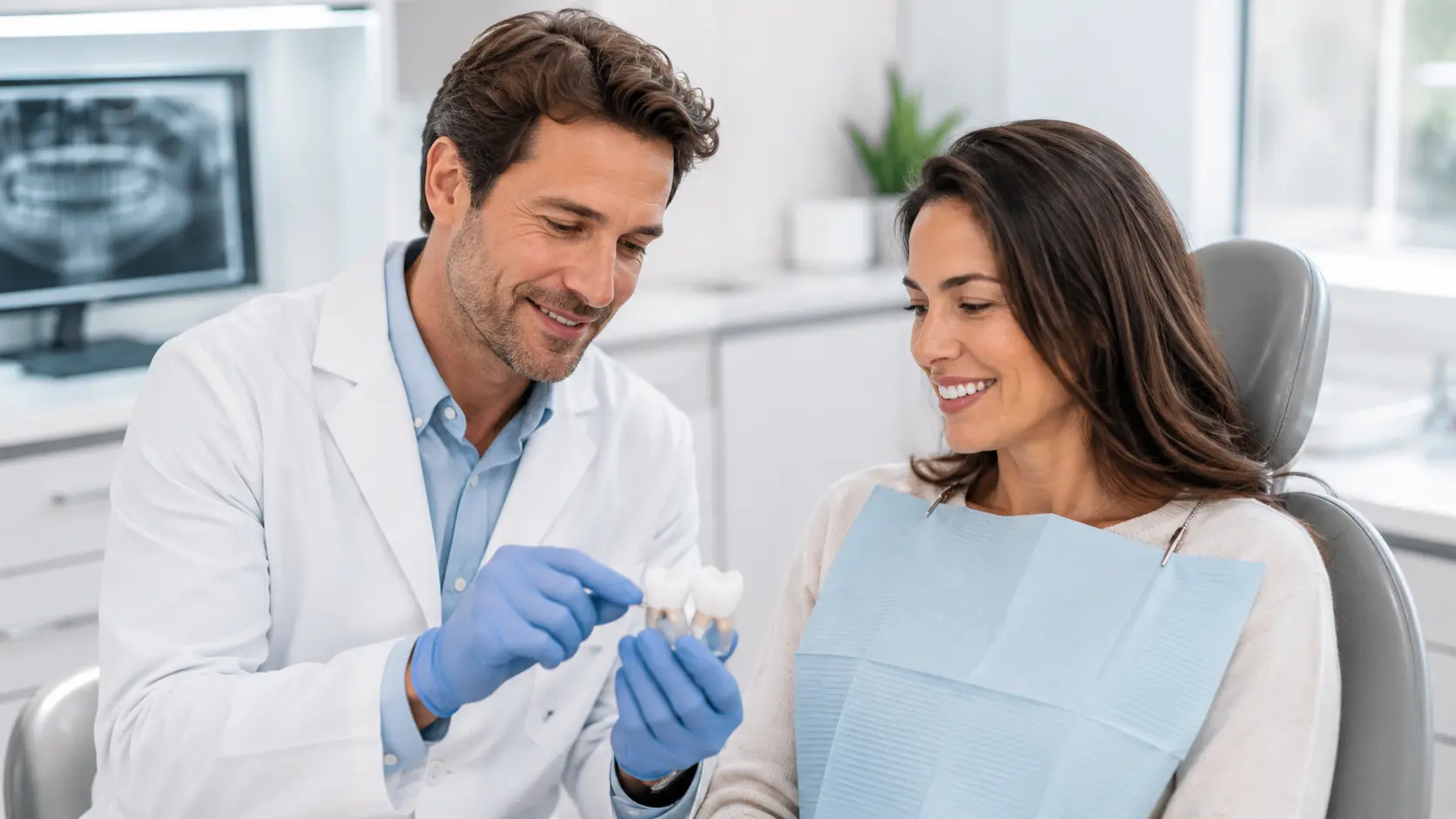
An implant depends on the jawbone around it for support. That makes the quantity and quality of available bone part of the evaluation before the final treatment plan is determined.
Some implant sites may be ready for surgical planning without additional procedures. Other areas may require grafting or another treatment strategy to create an appropriate foundation before or during implant placement.
Those additional procedures can affect timing, complexity and cost. The implant cannot be planned responsibly without first understanding the site where it will live.
When one tooth is missing, a traditional bridge and a single implant represent two fundamentally different approaches. A bridge relies on neighboring teeth for support, while an implant receives its support from within the missing-tooth site.
That distinction can become particularly meaningful when the teeth beside the space are otherwise healthy. An implant may allow those neighboring teeth to remain outside the replacement restoration rather than becoming bridge supports.
The final implant-supported crown still has to relate to those teeth. Independence from neighboring teeth does not mean independence from the rest of the mouth.
The final crown still has to fit the space, bite and neighboring contacts appropriately.
A missing tooth does not automatically make an implant the correct answer. Dental bridges remain a legitimate restorative option, and the condition of the neighboring teeth can make the comparison very different from one patient to another.
An implant places the support within the missing-tooth site. A crown or another restoration is then attached to that foundation once the implant is ready for the restorative phase.
A traditional fixed bridge spans the missing space and relies on neighboring teeth for support. Those supporting teeth receive restorations that connect to the replacement tooth between them.
If neighboring teeth already need crowns, a bridge may deserve a different conversation than it would beside two untouched healthy teeth. Bone, surgery, timing, cost and patient preference can also influence the choice.
Several restorative paths may exist when teeth are missing. Implants, bridges and removable partial or full dentures solve missing-tooth problems in different ways and with different tradeoffs.
A removable partial denture can replace several missing teeth without requiring an implant for every space. Full dentures may become relevant when most or all teeth in an arch are missing, while implants can sometimes be incorporated into larger restorative designs for added support.
The appropriate answer depends on what remains in the mouth and what treatment goals matter most. Fixed does not automatically mean better, and removable does not automatically mean inferior.
Support is placed within the jaw and the final restoration is attached to the implant foundation. The design can range from one tooth to larger restorative configurations.
A fixed bridge uses neighboring teeth as supports for a replacement tooth. It remains an important restorative alternative when the condition of those teeth and the rest of the case favor it.
Partial or full dentures can replace multiple missing teeth without requiring an implant in every space. They can be appropriate depending on anatomy, restorative goals and the condition of the remaining mouth.
Dr. Reeves first needs to understand which tooth or teeth are missing and what happened to them. The condition of surrounding teeth, gums, bite and previous dental work can all affect which replacement options deserve consideration.
Medical history, oral health and the implant site are evaluated before treatment moves forward. Appropriate examination and imaging help determine whether the available anatomy is compatible with the proposed plan.
The proposed implant position should relate to the tooth that ultimately needs to be restored above it. The plan should also make clear which clinician handles surgical placement and which clinician completes the restorative phase.
During the surgical phase, the implant fixture is positioned within the jawbone. That procedure creates the foundation that will eventually support the replacement tooth.
Bone heals around the implant in a process known as osseointegration. That biological process takes time and can require several weeks or months depending on the site and treatment plan.
Once the implant is ready for restoration, the visible replacement can be created. A single implant may receive an individual crown, while several implants may support a bridge or larger restorative design.
Implant-supported restorations still require normal hygiene and professional evaluation. Long-term care involves both the restoration and the tissues surrounding the implant.
Most patients do not care what the implant fixture looks like underneath the gum. They care that the completed tooth belongs in the space, functions with their bite and relates appropriately to neighboring teeth.
That is why the final restoration should influence implant planning from the beginning. Positioning the implant foundation without considering where the final crown needs to emerge can make the restorative phase more difficult.
The implant supports the restoration. The restoration should not be forced to compensate for a foundation that was planned without considering the finished result.
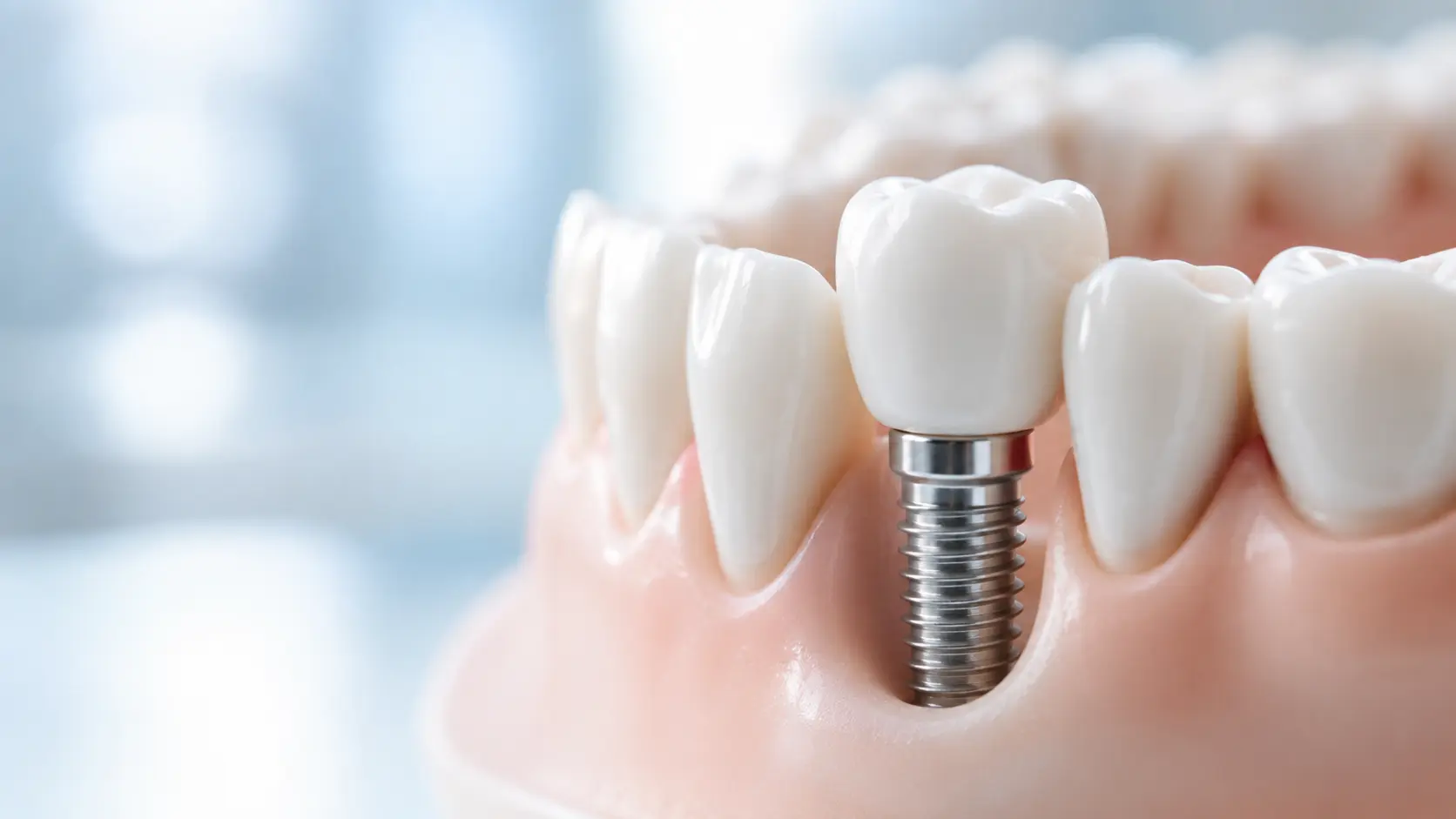
An implant-supported crown near the front of the mouth has restorative and aesthetic responsibilities at the same time. The replacement needs appropriate shape and color while also relating to the gumline, neighboring teeth and the way the smile frames that area.
The implant foundation is below the visible tooth, but its position can influence the restoration above it. That makes coordination between surgical planning and restorative design especially important when the replacement sits in a highly visible part of the smile.
Dr. Todd Reeves’ decades of cosmetic and restorative experience, combined with Dr. Coleman Reeves’ restorative focus, make this overlap particularly relevant at Reeves. The treatment needs to solve a missing-tooth problem while also respecting shape, proportion, neighboring teeth and the overall smile.
Dental implants can be used in several restorative configurations. Multiple implants may support a fixed bridge or provide support for a larger prosthetic restoration rather than requiring one implant for every missing tooth.
The design depends on how many teeth are missing, where the spaces are located and what anatomy is available for support. Existing teeth, bone, bite and the type of final restoration can all affect the number and position of implants.
This is where implant dentistry becomes less about individual fixtures and more about restorative architecture. The entire replacement design has to be considered before individual components are chosen.
A single missing tooth can often be restored with an individual implant-supported crown when the site and overall case are appropriate.
Multiple implants can support several replacement teeth without requiring one implant for every missing tooth. The design depends on the span and available support.
Implants can also become part of broader prosthetic treatment when many teeth are missing. The final restorative architecture should guide the implant plan.
Some patients are not trying to replace one isolated tooth. They may have several missing teeth, failing older dentistry, heavily compromised teeth or an entire arch that needs to be reconsidered as one restorative problem.
The Reeves practice approaches those situations from a comprehensive restorative perspective. Dr. Todd Reeves brings decades of restorative and cosmetic experience, while Dr. Coleman Reeves’ current restorative focus includes dental implants, crowns and full-arch restorations.
When the problem is large, treatment sequence becomes especially important. The plan should determine how implants fit into the restorative solution rather than assuming implants themselves are the entire solution.
The number of teeth involved, existing dentistry, bite and final restorative design all affect the treatment sequence.
Implants are often marketed as though every missing tooth leads to the same conclusion. Real restorative planning is more complicated because oral health, medical considerations, bone, anatomy, healing and available alternatives can all change the decision.
A bridge may make more sense in one mouth, while a removable option may make more sense in another. Preserving the natural tooth may also remain preferable when that tooth has not yet been lost and can still be predictably restored.
Adult age alone does not determine implant candidacy. Overall health, healing capacity, oral health and the condition of the implant site are often more important considerations.
Medical conditions, medications and tobacco use can all influence planning. Those factors need to be evaluated individually rather than using an arbitrary age cutoff.
Implant treatment involves the whole patient. The mouth does not exist separately from the rest of the body, so general health belongs in the restorative planning conversation.
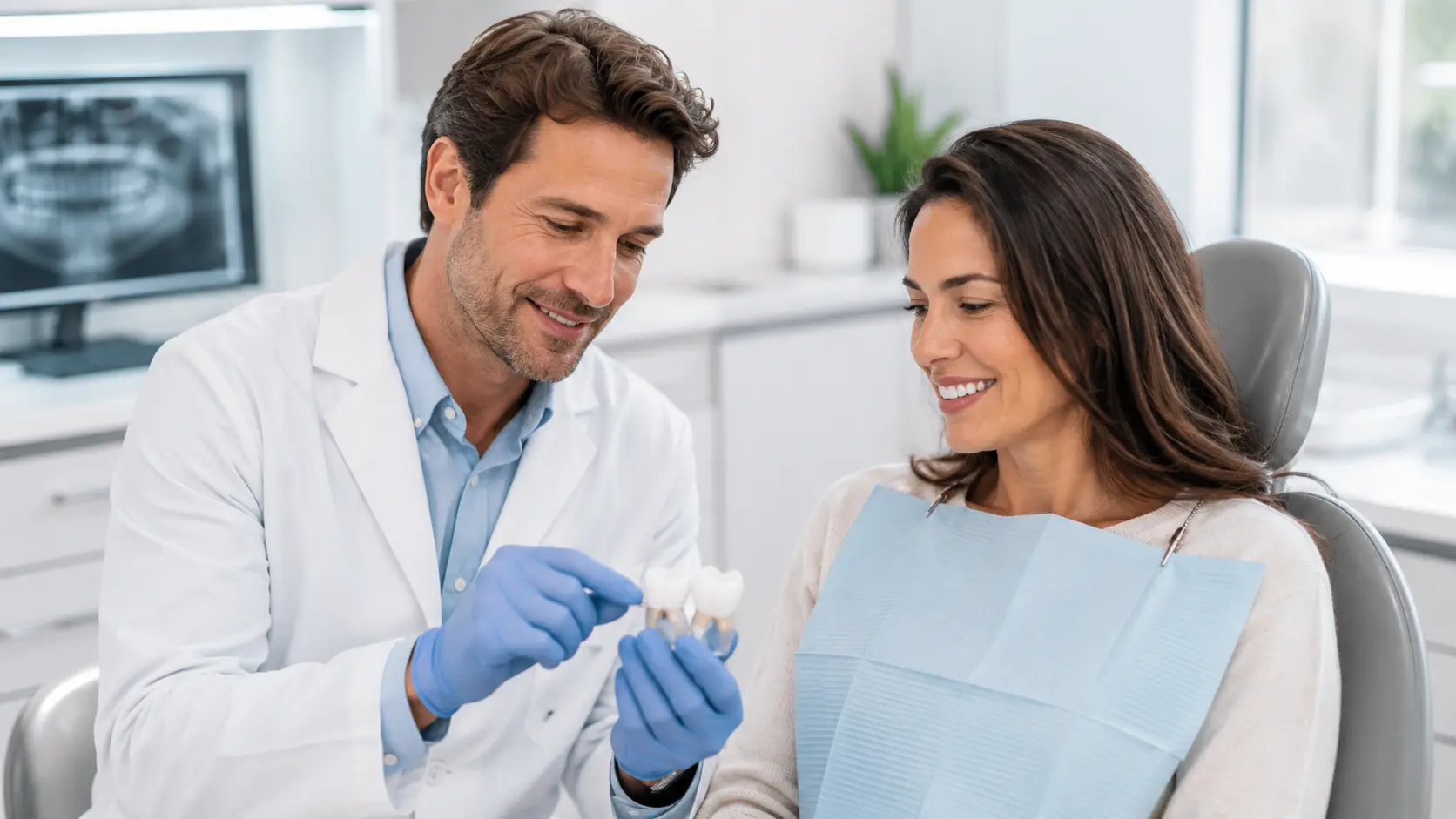
The implant fixture often needs time to integrate with the surrounding bone before the final restorative phase. That healing process can take several months, although the sequence varies depending on the specific site and treatment approach.
Additional procedures such as bone grafting can extend the overall timeline. The final restorative design and whether a temporary tooth is used during healing can also change how treatment is sequenced.
That does not make implant treatment unnecessarily slow. Healing is part of creating the foundation the final restoration depends on.
Diagnosis, imaging, anatomy and restorative goals shape the treatment sequence before surgery begins.
Osseointegration and any additional grafting or tissue procedures can add time between surgical and restorative phases.
The final crown, bridge or larger prosthetic restoration is completed once the implant site is ready to support it.
There is no responsible universal lifespan that should be promised for every dental implant or implant-supported restoration. Bone and gum health, oral hygiene, smoking, bite forces, general health and restorative design can all influence long-term performance.
The crown or larger prosthetic restoration above the implant is also its own piece of dental work. That restoration can experience wear or require repair or replacement even when the implant fixture beneath it remains stable.
The right message is not that implants last forever. Implant treatment creates a long-term restorative foundation that still requires professional evaluation and daily care.
The tissues around the implant remain important to long-term success. Maintenance should include evaluating those tissues, not only the visible crown.
Grinding, clenching and how the restoration receives force can influence long-term performance. The implant restoration still lives inside a functional bite.
The crown or larger prosthetic restoration may experience wear over time even when the implant fixture remains stable. It should be maintained like real dental work.
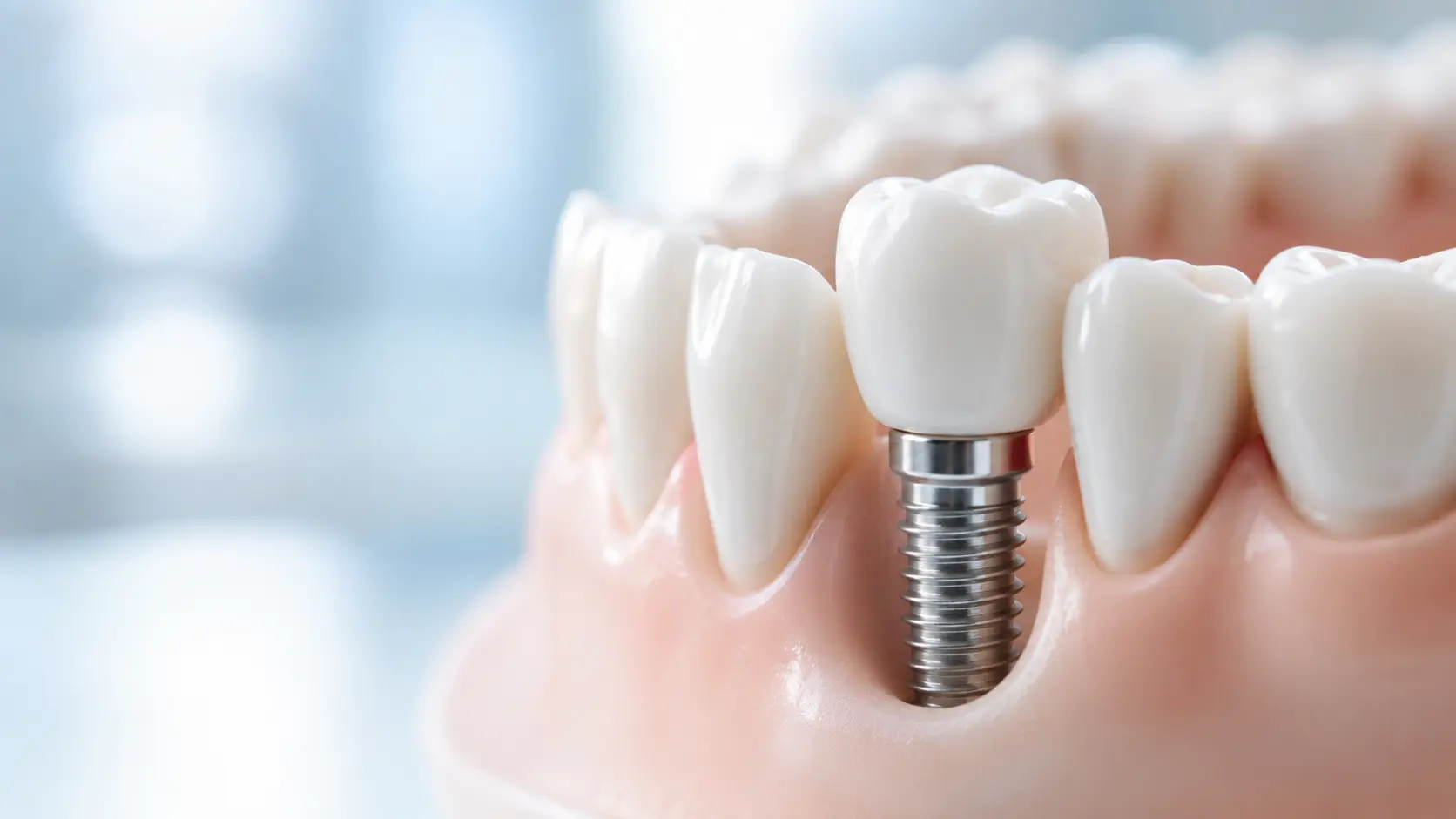
The implant fixture itself is not made of natural enamel and cannot develop decay in the same way a natural tooth can. The gum tissues, supporting bone and restoration around it can still develop problems if the area is not maintained appropriately.
Brush consistently and clean around the restoration according to the recommendations for your particular design. Regular dental visits also give the Reeves team an opportunity to evaluate the implant-supported restoration, surrounding tissues and bite before an obvious problem develops.
Tooth replacement does not eliminate dental maintenance. It simply changes what needs to be maintained.

Reeves Cosmetic Dentistry was established by Dr. Todd Reeves in Greystone in 1997 after he earned his dental degree from the University of Alabama at Birmingham. His continuing education has included cosmetic training through the Las Vegas Institute, giving him a perspective that considers both the structural requirements of dental treatment and how a finished restoration relates to the surrounding smile.

Dr. Coleman Reeves followed his father into dentistry after earning his own dental degree from UAB. His restorative focus includes dental implants, crowns and full-arch restorations, making implant-supported treatment and comprehensive restorative planning an important part of his work.
Those perspectives naturally overlap in implant dentistry. The surgical fixture may sit below the gums, but treatment ultimately has to become a tooth that functions within the bite and relates naturally to the surrounding mouth.
There is no single meaningful price for “a dental implant” because the phrase can refer to different portions of treatment. Surgical placement, possible grafting, the abutment, final crown or larger prosthetic restoration and other necessary care can all influence the overall treatment plan.
A single missing front tooth also represents a very different restorative problem from several missing back teeth or a full-arch case. The number of implants, type of restoration and complexity of the implant site can all affect cost.
That is another reason placement and restoration need to be explained separately. A useful estimate should make clear which phases and components are actually included.
Availability and financing terms can change, so current details should be confirmed with our office when treatment is being planned.
Dr. Todd Reeves and Dr. Coleman Reeves both contribute to the restorative side of the practice. Implant treatment therefore exists within a broader dental practice rather than functioning as an isolated procedure.
Dr. Todd Reeves established the practice in 1997 after earning his dental degree from UAB. That history creates continuity for patients whose restorative needs can evolve over many years.
Dr. Coleman Reeves’ professional focus includes dental implants, crowns and full-arch restorative treatment. That perspective becomes particularly relevant when one missing tooth is only part of a larger restorative situation.
Dr. Todd Reeves’ continuing cosmetic education and the practice’s cosmetic background matter when an implant-supported restoration sits in the visible smile. The final tooth still has color, shape, proportion and relationships with surrounding teeth.
Dental implants are not the only restorative path available at Reeves. Bridges and other restorative approaches can be considered when they make more sense for the individual mouth.
One missing tooth may be relatively contained, while several missing or compromised teeth can require coordinated treatment. The focus stays on the complete problem rather than one procedure.
Reeves Cosmetic Dentistry is located at 8040 Hugh Daniel Drive in Birmingham, in the Greystone area near the Highway 280 corridor.
If you have been searching for dental implants in Birmingham, AL, you do not need to arrive already certain that an implant is the correct solution. Dr. Todd Reeves and Dr. Coleman Reeves can begin with the missing tooth, surrounding teeth and larger restorative picture rather than asking you to arrive already committed to one treatment.
The consultation should also make the surgical and restorative phases understandable before treatment begins. You should understand what is being placed, what it will eventually support and which clinician is responsible for each part of the treatment.
8040 Hugh Daniel Drive
Birmingham, AL 35242
(205) 991-9997
Mon – Thu: 8:00PM – 5:00PM
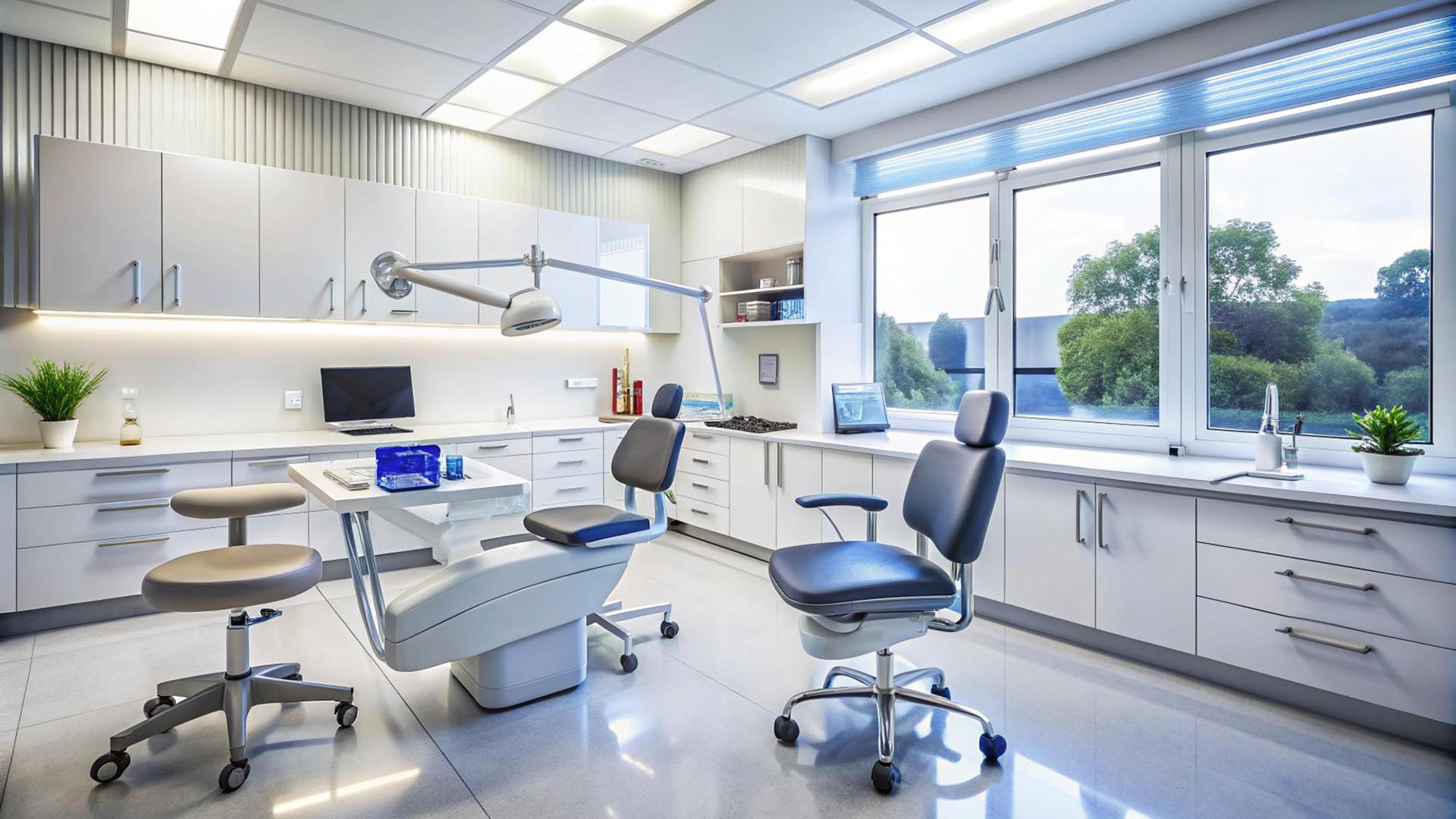
8040 Hugh Daniel Drive · Birmingham, AL 35242
A dental implant is a surgically positioned fixture that creates a foundation for a replacement tooth. Once the site has appropriately healed, the implant can support a crown, bridge or other prosthetic restoration depending on the treatment plan.
The implant is the foundation positioned within the jawbone, while the implant crown is the visible replacement tooth above it. An abutment commonly connects those two parts.
Yes. Dental implant care is part of the restorative treatment available through Reeves Cosmetic Dentistry, and Dr. Coleman Reeves' restorative focus specifically includes dental implants.
Implant treatment can involve separate surgical and restorative phases. Your consultation should clarify which clinician handles placement, which clinician completes the restoration and how those phases are coordinated.
Placement refers to surgically positioning the implant fixture within the jaw. Restoration refers to designing and attaching the crown, bridge or other replacement after the implant is ready to support it.
Candidacy depends on oral health, available bone, medical history, healing considerations and the condition of the individual implant site. General health and the actual anatomy can be more relevant than age alone.
Yes, an implant needs an appropriate foundation of bone for support. Some patients may require grafting or another treatment strategy before or around the time of placement.
Possibly. The amount and location of the bone loss matter, and additional treatment may sometimes make implant placement possible.
Tobacco use can interfere with healing and should be discussed during implant planning. That information belongs in candidacy and risk assessment rather than being ignored.
Adult age by itself does not automatically rule out treatment. Medical health, oral health and healing capacity are important considerations when Dr. Reeves evaluates whether implant treatment makes sense.
Implant treatment commonly happens over several phases because the implant often needs time to integrate with the jawbone. Additional procedures such as bone grafting can extend the overall timeline.
Osseointegration is the process in which bone heals around and integrates with the implant fixture. That biological integration creates the stable foundation needed before many implants receive their final restoration.
Neither treatment is universally better for every missing tooth. A bridge relies on neighboring teeth for support, while an implant places support within the missing-tooth site, so the condition of the mouth determines which tradeoffs matter most.
Yes, a single implant can support an individual crown when the case is appropriate. The crown is then designed around the missing space, neighboring teeth and bite.
Yes. Multiple implants can support bridges or larger restorative designs, and the number of implants does not necessarily have to equal the exact number of missing teeth.
Implants can become part of larger restorative plans involving an entire arch. Dr. Coleman Reeves' restorative focus includes full-arch restorations, and the specific treatment design should be determined after a comprehensive evaluation.
It is better not to promise that any dental treatment is permanent. Implants are intended as long-term restorative foundations, but the surrounding tissues and restorations still require maintenance and can change over time.
The implant fixture itself cannot develop a cavity because it is not natural enamel. The tissues and prosthetic restoration around the implant still need consistent cleaning and professional evaluation.
Implant-supported teeth require regular home hygiene and dental follow-up. The exact cleaning technique can vary depending on whether the implant supports a single crown, bridge or larger restoration.
Cost depends on the number of implants, surgical requirements, possible bone grafting, abutments and the final restorative design. A meaningful estimate should also make clear which portions of surgical and restorative treatment are included.
Coverage varies significantly between dental plans. The office can review the patient's specific benefits rather than making a universal promise about coverage on the website.
Yes. Depending on the location and number of missing teeth, alternatives may include fixed dental bridges and removable partial or full dentures.
You do not need to choose the procedure before scheduling. Dr. Todd Reeves and Dr. Coleman Reeves can evaluate the missing-tooth problem, neighboring teeth, bite and restorative goals and explain which replacement approaches deserve further consideration.
Maybe one tooth has already been gone for years, or maybe you have just learned that a compromised tooth may not be maintainable. You may also be comparing a bridge with an implant and trying to understand why one recommendation makes more sense than another.
You do not need to choose the implant before the consultation. Dr. Todd Reeves and Dr. Coleman Reeves can first evaluate the space, surrounding teeth and larger restorative picture and determine which replacement paths deserve consideration.
If implant treatment makes sense, the plan should make every phase understandable. You should know how the implant foundation will be handled, what restoration it will eventually support and how that finished tooth fits into the rest of the mouth.
Request an implant consultation online or call the Greystone office directly.

Personalized cosmetic, restorative, implant and family dentistry in Greystone, Birmingham, Alabama.
Copyright © 2027 All Rights Reserved.