

Preloader
  1. Home
  2. Restorative Dentistry
  3. Full-Arch Restorations

FULL-ARCH RESTORATIONS IN GREYSTONE

Full-Arch Restorations in Birmingham, Alabama

One damaged tooth can usually be evaluated as one restorative problem. When an entire upper or lower arch contains missing teeth, failing restorations, heavily compromised teeth or several different problems at once, treating each tooth independently can create a plan that never really addresses the whole mouth.

Dr. Todd Reeves and Dr. Coleman Reeves provide comprehensive restorative care at Reeves Cosmetic Dentistry, and Dr. Coleman’s restorative focus includes full-arch restorations, crowns and dental implants. Full-arch treatment begins by determining what can remain, what may need replacement and how the finished teeth ultimately need to function together.

The goal is not to find the most dramatic procedure available. It is to build one coherent plan for an arch that can no longer be treated as a collection of unrelated teeth.

LOOK AT THE WHOLE ARCH

The larger the problem becomes, the more important the sequence becomes.

Preservation, replacement, bite, implants, materials and maintenance all belong to one restorative plan.

Two generations of Reeves dentists
Full-arch restorative focus
Greystone practice since 1997

THE ARCH IS THE PROBLEM

When Enough Teeth Are Involved, The Planning Has to Get Bigger

A crown can solve a problem involving one tooth, and an implant may replace one missing tooth. Those procedures become more complicated when several damaged or missing teeth occupy the same arch and every decision begins affecting the teeth beside it.

One restoration may change the bite for another tooth, while replacing missing teeth may change where support needs to come from. Existing crowns, worn teeth, gum relationships and the condition of the remaining natural teeth all begin interacting with one another.

That is where full-arch restorative planning becomes useful. Instead of asking what procedure belongs on each tooth first, Dr. Reeves begins by asking what the entire arch needs to become.

TREATING AN UPPER OR LOWER ARCH AS A WHOLE

What Does Full-Arch Restoration Mean?

A dental arch is the curved group of teeth in either the upper or lower jaw. Full-arch restoration refers broadly to treatment in which most or all of that arch needs to be considered together rather than restoring one isolated tooth at a time.

That does not mean every patient receives the same procedure. One plan may preserve more natural teeth and restore them individually, while another may involve replacement teeth supported by dental implants or a larger prosthetic restoration.

Upper Arch

A full-arch plan can involve the upper teeth while the lower arch remains largely natural or needs much less treatment.

Lower Arch

The same concept applies to the lower teeth. The restored arch still has to be designed around what it will function against.

One Coordinated System

Full-arch restoration describes the scale of the problem rather than one specific product, implant count or surgical technique.

Full-arch restoration describes the scale of the problem.

It does not automatically describe one particular product, implant count or surgical technique. The treatment design should come after the condition of the arch has been understood.

TWO TERMS THAT ARE OFTEN CONFUSED

Full-Arch Restoration Is Not Necessarily the Same as Full-Mouth Restoration

FULL ARCH

One upper or lower arch.

A full arch refers to either the upper teeth or the lower teeth. Treatment may involve one entire arch while the opposite arch remains largely natural or requires much less dentistry.

FULL MOUTH

Significant treatment across both arches.

Full-mouth restoration usually describes a broader situation in which significant restorative treatment involves both the upper and lower teeth. The terminology can overlap, but the scale of treatment is not always identical.

The bite connects the two arches.

Even when only one arch requires extensive treatment, Dr. Reeves still has to understand what that restored arch will function against.

WHEN ONE-TOOTH DENTISTRY STOPS BEING ENOUGH

Full-Arch Treatment May Become Relevant When Several Problems Overlap

Multiple Missing Teeth

Several missing teeth can change support, chewing and how the remaining teeth interact. Replacement planning then has to consider the spaces collectively rather than filling each gap without regard to the rest of the arch.

Several Heavily Damaged Teeth

An arch may contain fractures, extensive previous restorations or teeth with significant structural loss. When enough teeth are compromised, planning them together can be more useful than deciding on each restoration independently.

Aging or Failing Dental Work

Older crowns, bridges and large restorations may have been completed at different points in time. If several begin requiring attention, simply replacing them one by one may miss the larger restorative relationships.

Extensive Tooth Wear

Worn teeth can affect shape, bite relationships and available tooth structure throughout an arch. The more widespread the wear becomes, the more important it is to understand the entire pattern before rebuilding individual teeth.

An Existing Denture That No Longer Fits the Patient’s Goals

Some patients already use removable teeth but want to understand whether another restorative design is possible. Implant-supported treatment may enter that conversation, but candidacy, anatomy and restorative goals still determine what is realistic.

PRESERVE WHAT STILL MAKES SENSE

Full-Arch Restoration Does Not Automatically Mean Removing Every Tooth

The phrase full arch can sound as though treatment begins by removing everything that remains. That should not be the assumption.

Natural teeth that can be predictably maintained may still have value within a comprehensive restorative plan. Dr. Reeves needs to evaluate which teeth have a reasonable future, which need protection and which may no longer offer a predictable foundation.

THE DECISION

Not natural teeth versus implants.

Which structures can responsibly remain?

Preservation and replacement can exist within the same comprehensive plan.

IMPLANT-SUPPORTED FULL-ARCH RESTORATION

Dental Implants Can Become the Foundation for A Larger Restoration

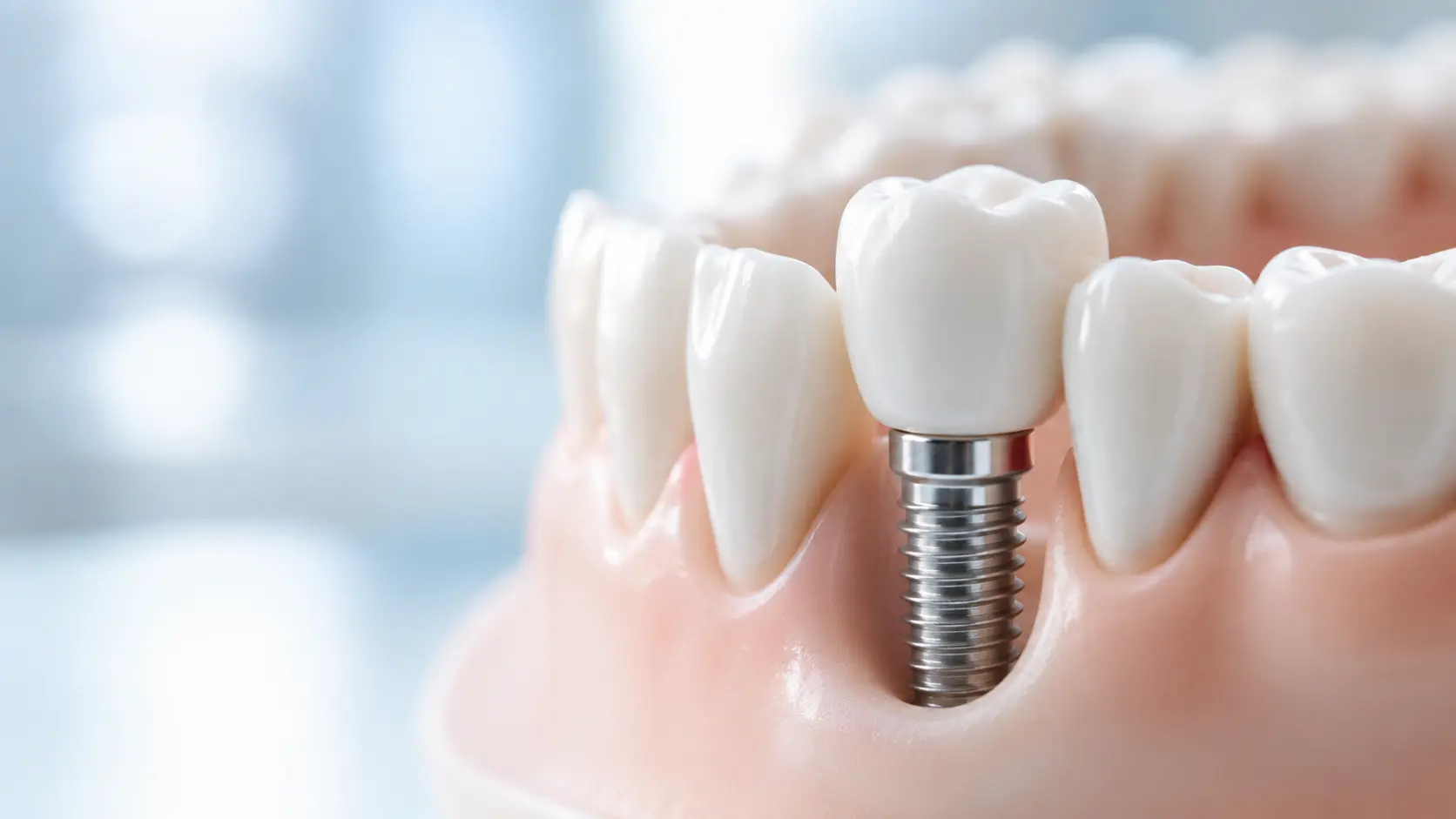
When many or all teeth in an arch are missing, dental implants can sometimes support a larger fixed or removable prosthetic restoration. Several implants may provide support for multiple replacement teeth rather than requiring an individual implant underneath every tooth position.

This is fundamentally different from replacing one isolated tooth with one implant and one crown. The implants, prosthetic design, bite, available bone and distribution of support all become parts of one larger restorative system.

Reeves provides dental implant care, and Dr. Coleman’s restorative focus includes both dental implants and full-arch restorations. Implant-supported treatment can therefore be evaluated without assuming every full-arch case requires implants.

BRANDED TERMS VS. THE ACTUAL TREATMENT

Is Full-Arch Restoration the Same as All-on-4®?

No. All-on-4 refers to a specific implant-supported full-arch treatment concept in which a complete arch is supported by four implants, while the broader term full-arch restoration can describe several different restorative designs.

Patients may also encounter terms such as All-on-X, full-mouth implants or fixed full-arch teeth while researching treatment. Those terms can describe different implant counts, restorative designs and surgical approaches, so the exact plan should be determined clinically rather than assumed from a marketing label.

At our practice, we do not need to force every failing arch into one branded protocol. The treatment design should follow the anatomy, restorative goals and condition of the mouth.

THE IMPORTANT QUESTION

What restorative design makes sense for this arch?

Implant count is one part of a full-arch plan. Bone, support, bite, prosthetic design and long-term maintenance matter too.

FULL-ARCH CARE CAN INVOLVE DIFFERENT CLINICIANS

Surgical Implant Treatment and Full-Arch Restoration Are Different Parts of the Process

An implant-supported full arch can include a surgical phase in which implant fixtures are placed within the jaw. It also includes a restorative phase in which the teeth above those implants are designed, fabricated, adjusted and ultimately maintained.

Those phases need to be coordinated because implant position affects what the restorative dentist can create above it. The final teeth should therefore influence planning before the surgical foundation is established.

The foundation and the final teeth belong to the same plan. Your consultation should make clear who handles each phase and how those phases are coordinated.

WHO MAY BE A CANDIDATE?

Full-Arch Restoration Depends on What Remains and What Can Support the Plan

Candidacy cannot be determined from the number of missing teeth alone. Dr. Reeves has to understand the condition of the remaining teeth, gums, bone, bite and the patient’s general health before recommending a large restorative plan.

Which Natural Teeth Can Be Maintained?

A tooth should not automatically be removed because a larger treatment plan is being considered. The condition and prognosis of each remaining tooth need to be understood first.

Is Implant Support Being Considered?

If implants may become part of treatment, available bone and anatomy need to be evaluated. Medical history, tobacco use and healing considerations also become relevant.

What Does the Opposing Arch Look Like?

A restored upper arch still has to function against the lower teeth, and the same is true in reverse. Existing restorations, natural teeth and bite relationships on the opposite side influence the final design.

Can the Restoration Be Maintained?

A large restorative treatment still requires home hygiene and professional maintenance. The design should be something the patient can realistically clean and the dental team can continue evaluating.

SUPPORT STARTS BELOW THE TEETH

Implant-Supported Full-Arch Treatment Is Also A Bone and Anatomy Problem

When implants are considered, the amount and distribution of available bone become part of treatment planning. A full-arch restoration needs support in locations that work not only surgically but also for the final prosthetic design.

Some implant sites may be straightforward, while others may require additional procedures or another surgical approach. The exact anatomy can influence implant number, position, treatment sequence and whether a proposed design is appropriate.

The prosthesis cannot be planned independently from its foundation. The foundation should not be created without understanding the prosthesis it eventually needs to support.

THE FOUNDATION

Bone distribution affects more than surgery.

It can influence implant position, prosthetic design, treatment sequence and whether the final restoration can be supported as intended.

AN ENTIRE ARCH MEETS ANOTHER ENTIRE ARCH

Full-Arch Restoration Makes the Bite Impossible to Ignore

One crown interacts with several surrounding teeth, but an entire restored arch interacts with the opposite arch across many points of contact. That gives bite planning a much larger role.

Tooth position, restorative material, available space and how forces are distributed can all affect the final design. Grinding or clenching may also change the demands placed on a large restoration.

FUNCTION FIRST

A full arch has to do more than look complete in a photograph.

It has to function as part of a moving system every time the patient closes, chews and uses the teeth.

A LARGE RESTORATION CHANGES A LARGE PART OF THE SMILE

Full-Arch Dentistry Is Restorative—But Appearance Still Matters

When many visible teeth are being rebuilt together, shape and proportion become difficult to separate from function. Tooth length, width, position, color and the relationship with the lips can influence how the entire restoration feels within the face.

This is one area where Dr. Todd Reeves’ longstanding cosmetic background becomes especially relevant. He established Reeves Cosmetic Dentistry in 1997 and pursued continuing cosmetic education through the Las Vegas Institute, while Dr. Coleman brings a restorative focus that includes full-arch treatment.

The two perspectives are complementary. A large restoration still needs structural logic, but it also occupies a significant part of the visible smile.

THE FIRST SET MAY NOT BE THE LAST SET

Some Full-Arch Treatment Plans Include A Temporary Restorative Phase

In implant-supported treatment, patients may sometimes receive a provisional restoration while implants and surrounding tissues heal. That temporary phase can allow the restorative and surgical team to evaluate function, appearance and tissue changes before a final prosthesis is completed.

That does not mean every full-arch patient receives teeth on the same day as implant placement. Immediate loading depends on implant stability, anatomy, surgical considerations and the particular treatment design.

Timing follows the biology and the treatment plan. A same-day provisional restoration should be discussed only when the individual case supports it.

PROVISIONAL VS. FINAL

A temporary restoration can be part of the evaluation process.

Function, appearance, tissue healing and cleansability may all inform the final design before it is completed.

BUILD THE PLAN BEFORE REBUILDING THE ARCH

Comprehensive Treatment Usually Happens in Phases

01

Understand What Is No Longer Working

The conversation begins with the problems the patient is actually living with. Missing teeth, failing dentistry, looseness, wear, difficulty chewing or dissatisfaction with an existing prosthesis can all lead to different restorative priorities.

02

Evaluate the Remaining Teeth

Dr. Reeves examines which teeth can reasonably remain and which may no longer offer a predictable restorative foundation. Existing crowns, bridges and other dental work also become part of that evaluation.

03

Evaluate Bone, Gums and Bite

The supporting structures and the opposing arch need to be understood before the final restorative design is chosen. Implant-supported treatment adds additional surgical and anatomical considerations.

04

Compare Treatment Designs

One plan may preserve several natural teeth, while another may rely more heavily on implant-supported replacement. Removable and fixed designs may also deserve comparison depending on the condition of the mouth and the patient’s goals.

05

Coordinate the Sequence

Large restorative treatment can involve multiple procedures over time. The order matters because one stage often creates the foundation for the next.

06

Complete Any Surgical Phase

If teeth need removal, implants need placement or grafting is necessary, those procedures become part of the sequence. The clinicians responsible for each surgical phase should be clear before treatment begins.

07

Build and Evaluate the Restorative Teeth

Temporary or provisional restorations may sometimes be used before the final design is completed. Shape, bite, comfort, cleansability and appearance can all influence refinement.

08

Complete the Final Restoration

The final teeth are fabricated and placed once the restorative and biological conditions are appropriate. Completion should mean the arch has been evaluated as a functional restorative system.

09

Maintain the Result

Full-arch restorations still require professional follow-up and daily hygiene. Maintenance continues after treatment because the supporting tissues, restorations and bite can all change over time.

THERE IS MORE THAN ONE WAY TO REBUILD AN ARCH

Full-Arch Treatment Does Not Automatically Mean Fixed Teeth

Some patients strongly prefer a fixed restoration that remains attached during everyday use. Others may be better served by a removable design because of anatomy, hygiene, treatment complexity, cost or other individual factors.

Implants can also be used in different ways. They may support a fixed full-arch prosthesis in one case or improve the stability and retention of a removable prosthesis in another.

Fixed

A fixed prosthesis remains attached during everyday use. Implant support, prosthetic design and cleansability all influence whether this approach makes sense.

Removable

A removable design can be appropriate because of anatomy, hygiene, treatment complexity, cost or patient preference. Implant support may sometimes improve retention without making the restoration fixed.

Fixed is a design choice—not a synonym for success.

The stronger plan is the one that fits the patient’s anatomy, restorative needs and ability to maintain it. The restoration needs to work after the marketing language disappears.

LARGE TREATMENT REQUIRES GOOD CASE SELECTION

More Dentistry Is Not Automatically Better Dentistry

A patient with several dental problems does not automatically need an entire arch rebuilt. If individual teeth can be predictably treated with more limited dentistry, a comprehensive full-arch approach may represent more treatment than the situation requires.

General health, oral hygiene, smoking, bone conditions, financial considerations and willingness to maintain the final restoration can also influence whether a large treatment plan makes sense. Those considerations should be discussed before a patient becomes emotionally committed to a particular outcome.

MATCH THE SCALE

The scale of treatment should match the scale of the problem.

Full-arch restoration becomes valuable when the arch genuinely needs comprehensive planning.

TWO GENERATIONS OF REEVES DENTISTRY

Comprehensive Restorative Planning With Dr. Todd Reeves and Dr. Coleman Reeves

DR. TODD REEVES

Decades of comprehensive and cosmetic experience.

Dr. Todd Reeves established the Greystone practice in October 1997 after earning his dental degree from UAB in 1995, where he graduated second in his class. His continuing cosmetic education through the Las Vegas Institute has contributed to a practice philosophy centered on comprehensive dental health and understanding the treatment options available.

DR. COLEMAN REEVES

Restorative focus including crowns, implants and full-arch restorations.

Dr. Coleman Reeves followed his father into dentistry after earning his own dental degree from UAB. His professional focus is restorative dentistry, including crowns, dental implants and full-arch restorations among the more complex restorative needs he treats.

Those perspectives become especially useful when treatment becomes large.

Todd brings decades of comprehensive and cosmetic experience, while Coleman brings an explicitly restorative focus that includes full-arch care.

COMPREHENSIVE TREATMENT HAS A SEQUENCE

Full-Arch Restoration Usually Requires More Than One Appointment

There is no responsible universal timeline for full-arch treatment. A plan involving restoration of remaining natural teeth can follow a different schedule from a plan involving extractions, grafting, implants, healing and a final implant-supported prosthesis.

If implants are involved, healing and osseointegration may require several months before certain restorative stages can be completed. Additional surgical procedures can extend that sequence further.

The timeline should come from the actual treatment plan. Faster is valuable when biology and restorative requirements allow it, but speed should not determine the design.

LARGE RESTORATIONS STILL NEED CARE

Full-Arch Treatment Is Built for Long-Term Use—Not a Lifetime Guarantee

There is no universal lifespan that applies to every full-arch restoration. Material, bite forces, implant and gum health, remaining natural teeth, hygiene, smoking and the design of the prosthesis can all influence long-term performance.

The individual components can also behave differently over time. An implant fixture may remain stable while a prosthetic tooth, screw, surface material or another part of the restoration eventually requires maintenance or repair.

That should not be presented as treatment failure by default. Large restorative systems are still dental work, and dental work remains something that needs professional maintenance.

Restorative Materials

Material choices affect how the prosthesis handles function, appearance and future maintenance. No material removes the need for ongoing evaluation.

Supporting Tissues

Implant and gum health remain part of long-term care. A stable prosthesis still depends on the tissues and structures that support it.

Mechanical Maintenance

Connected restorative systems have components that can wear or need service over time. Repair does not automatically mean the entire treatment has failed.

NEW TEETH STILL REQUIRE DAILY CARE

A Full-Arch Restoration Should Be Designed So It Can Be Maintained

Maintenance becomes particularly important when several teeth are connected within one restorative design. Patients need to understand how to clean around the restoration, implants, gums or remaining natural teeth depending on what treatment they receive.

The hygiene approach may be different from brushing and flossing individual natural teeth. Professional appointments also allow the Reeves team to evaluate the supporting tissues, restorative components and bite before small issues become larger ones.

Treatment is not finished when the prosthesis is delivered. Cleansability belongs in the design conversation from the beginning.

PLANNING A LARGE RESTORATIVE INVESTMENT

How Much Do Full-Arch Restorations Cost in Birmingham?

There is no single meaningful price for full-arch treatment because radically different procedures can fall under the same broad phrase. Restoring several remaining teeth is fundamentally different from removing compromised teeth, placing implants and building a complete implant-supported prosthesis.

Cost may depend on the number of teeth being treated, whether implants are involved, surgical needs, materials, temporary restorations, laboratory requirements and the complexity of the final prosthetic design.

A useful estimate should identify what treatment is included, not simply provide a number under the heading “full arch.”

FINANCING

CareCredit is currently financing option.

Current availability and terms should be confirmed directly with our office before treatment begins. The useful cost discussion starts after the actual restorative plan is clear.

WHY REEVES

Full-Arch Treatment Within a Comprehensive Restorative Practice

Documented Full-Arch Restorative Focus

Dr. Coleman Reeves’ restorative focus includes full-arch restorations, dental implants and crowns. Full-arch care therefore fits naturally within the restorative services Reeves already provides.

Two Reeves Dentists

Dr. Todd Reeves and Dr. Coleman Reeves both contribute to the restorative philosophy of the practice. A complex case can be considered within the context of the broader Reeves practice rather than reduced to one implant procedure.

Nearly Three Decades in Greystone

Dr. Todd Reeves established the practice in October 1997. That history provides continuity for patients whose restorative needs can change significantly over time.

Cosmetic Perspective

Rebuilding many visible teeth at once carries aesthetic responsibilities as well as structural ones. Todd’s cosmetic training and the practice’s cosmetic background can inform appearance without replacing sound restorative planning.

Implant and Crown Experience

Reeves provides dental implant care, crown-and-bridge dentistry and digital restorative treatment. Full-arch treatment sits naturally above those services as a more comprehensive level of planning.

No One-Size-Fits-All Protocol

A failing arch does not automatically equal one branded implant procedure. Reeves can evaluate preservation, replacement, fixed and removable approaches before the final design is chosen.

FULL-ARCH RESTORATIONS IN GREYSTONE

Comprehensive Restorative Care Convenient to Birmingham and Highway 280

Reeves Cosmetic Dentistry is located at 8040 Hugh Daniel Drive in Birmingham, in Greystone near the Highway 280 corridor. Both Dr. Todd Reeves and Dr. Coleman Reeves practice at this location, with Coleman’s restorative focus including full-arch care.

If you have been searching for full-arch restorations in Birmingham, you do not need to arrive knowing whether you need crowns, implants, a fixed prosthesis or another design. The purpose of the consultation is to understand what remains, what can be preserved and what scale of restorative treatment the arch actually requires.

Reeves Cosmetic Dentistry at Greystone

8040 Hugh Daniel Drive
Birmingham, AL 35242
(205) 991-9997

Mon-Thu: 8:00AM – 5:00PM

GREYSTONE LOCATION

Convenient to the Highway 280 corridor.

8040 Hugh Daniel Drive · Birmingham, AL 35242

FULL-ARCH RESTORATION FAQS

Questions About Full-Arch Restorations in Birmingham

A full-arch restoration is a comprehensive restorative plan involving most or all of the teeth in one upper or lower dental arch. Treatment can vary substantially depending on how many natural teeth remain, their condition and whether implant-supported replacement is being considered.

No. A full-arch plan can include preservation and restoration of natural teeth when those teeth remain predictably maintainable, so the term does not automatically mean removing everything.

Not necessarily. Full-arch treatment generally refers to one upper or lower arch, while full-mouth restoration usually implies significant treatment involving both arches.

Yes. Dr. Coleman Reeves’ restorative focus includes full-arch restorations among the more complex restorative needs he treats.

No. Some full-arch cases may involve implant-supported teeth, while others may preserve and restore natural teeth or use another prosthetic design.

Yes, several dental implants can be used to support a larger prosthetic restoration that replaces multiple teeth. The number and position of implants depend on anatomy, restorative design and surgical planning.

No. Full-arch implant designs can use several implants to support multiple replacement teeth rather than requiring one implant beneath every tooth position.

No. All-on-4 is a specific implant-supported concept using four implants to support a full arch, while full-arch restoration is a broader category of restorative treatment. The appropriate implant count and prosthetic design should be determined from the individual case.

Full-arch treatment can involve separate surgical and restorative phases. Your consultation should clarify which clinician handles surgical treatment, which clinician completes the restorative phases and how those parts are coordinated.

Possibly. Implant-supported fixed restorations are one possible design for selected patients, while removable options may remain more appropriate in other cases.

Potentially. Existing denture patients can be evaluated for implant-supported alternatives, but bone, general health, anatomy and restorative considerations influence candidacy.

Dr. Reeves should first determine which teeth can be predictably maintained. A comprehensive treatment plan does not require removing useful natural teeth simply to make the treatment design more uniform.

Several compromised teeth may make broader restorative treatment appropriate. The actual plan depends on which teeth remain maintainable and which no longer provide a predictable long-term foundation.

Implant-supported treatment requires an appropriate anatomical foundation. Bone quantity and distribution can influence implant position, surgical requirements and the overall restorative design.

Yes, additional surgical treatment can sometimes be part of implant planning when the available bone is not appropriate for the proposed restoration. Whether that is necessary depends on the actual anatomy.

Some implant protocols can use an immediate provisional restoration when clinical conditions allow. Timing depends on implant stability, anatomy, surgical considerations and the specific restorative plan.

The timeline varies considerably depending on whether treatment involves natural teeth, extractions, implants, grafting, healing or a provisional restoration. Implant-based plans can take several months when biological healing is part of the sequence.

Some comprehensive plans use provisional restorations during healing or while the final design is being evaluated. Whether that is possible and what type of temporary restoration is appropriate depends on the individual plan.

They can be fixed or removable depending on the design. Implant support can also be incorporated into either type, so the term implant-supported does not by itself tell you whether the prosthesis is removable.

There is no universal lifespan that applies to every design. Material, bite forces, hygiene, supporting tissues, implants, remaining natural teeth and maintenance all influence long-term performance.

Cleaning depends on the restorative design. Patients may need techniques and tools specifically intended for cleaning under or around connected teeth and implant-supported prostheses.

Cost depends heavily on what is actually being treated. A plan restoring natural teeth can be fundamentally different from one involving extractions, implants, surgery and a complete prosthetic arch.

Coverage varies by plan and by the individual procedures involved. The Reeves team can review specific benefits after the proposed treatment has been established.

You do not need to make that diagnosis yourself. If several teeth are failing, missing, heavily restored or no longer functioning predictably, Dr. Todd Reeves and Dr. Coleman Reeves can evaluate whether the problems should be planned individually or as one comprehensive restorative case.

LOOK AT THE WHOLE ARCH

When Does a Collection of Dental Problems Become One Restorative Problem?

Maybe several teeth have been repaired repeatedly over the years, or perhaps missing teeth, older crowns and damaged teeth are now beginning to overlap. You may also be living with a removable prosthesis and wondering whether another restorative design deserves consideration.

You do not have to decide that you need implants, full-mouth reconstruction or a particular branded procedure before the appointment. Dr. Todd Reeves and Dr. Coleman Reeves can first determine what can remain, what needs rebuilding and whether the arch genuinely requires comprehensive treatment.

If full-arch restoration makes sense, the next step is building the sequence. The supporting teeth or implants, bite, final tooth positions, restorative materials and long-term maintenance should all become parts of one plan.

START THE CONVERSATION

Start with what is no longer working.

Request a restorative consultation online or call the Greystone office directly.